Artificial Intelligence (AI) is no longer just a futuristic idea it has become a powerful force actively transforming the way we work, collaborate, and grow in our careers. In 2026, AI is deeply integrated into everyday business operations, driving efficiency by automating repetitive tasks and empowering smarter, data-driven decision-making across industries.
Whether you’re an employee, entrepreneur, or business leader, understanding how AI is reshaping the workplace is no longer optional it’s a critical skill for staying competitive in a rapidly evolving world.
What Is AI in the Workplace?
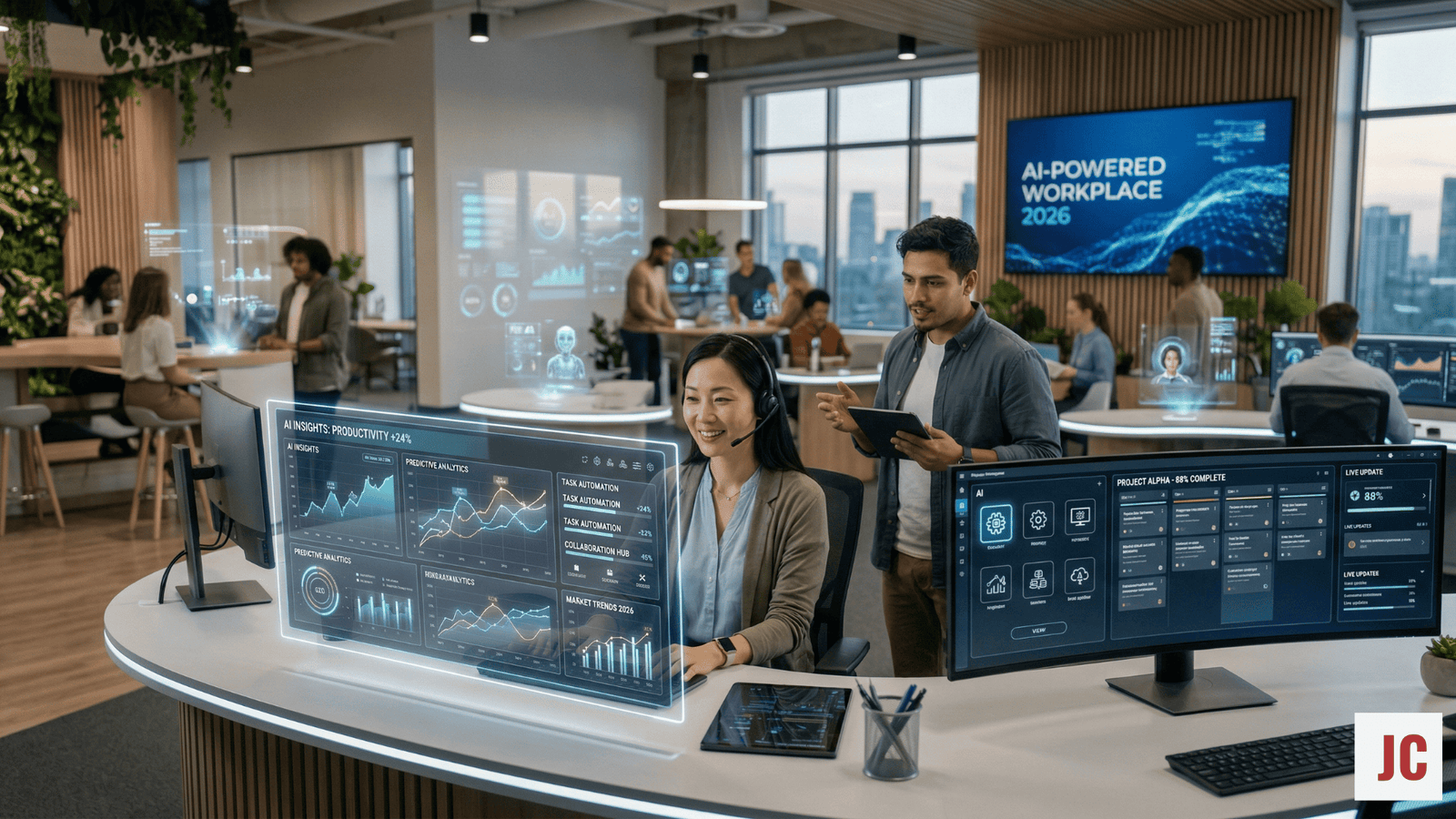
AI in the workplace refers to the use of intelligent systems and algorithms to perform tasks that typically require human intelligence. These include
- Data analysis
- Customer service
- Content creation
- Decision-making support
- Process automation
Instead of replacing humans entirely, AI is increasingly becoming a collaborative tool that enhances productivity and efficiency.
1. Automation of Repetitive Tasks
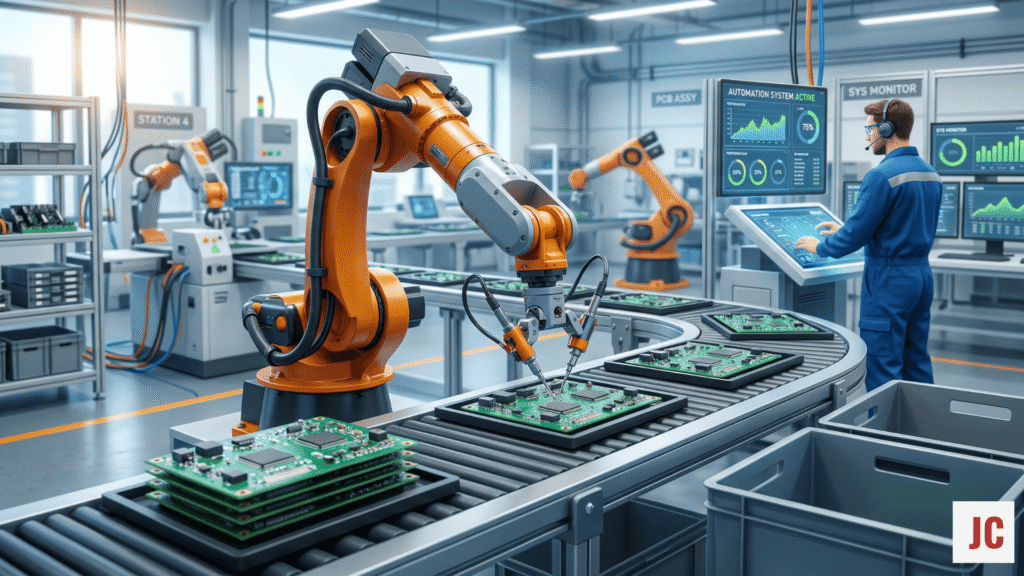
One of the most significant ways AI is transforming the workplace in 2026 is through automation. Tasks that once required hours of manual effort such as data entry, report generation, and scheduling—can now be completed instantly by AI-powered systems.
Common examples include
- Automated email responses that save time on routine communication
- Smart scheduling assistants that manage calendars effortlessly
- AI-powered data processing tools that analyze large datasets in seconds
As a result, employees are no longer stuck doing repetitive work. Instead, they can focus on higher-value activities such as strategic thinking, creative problem-solving, and innovation areas where human intelligence still plays a crucial role.
2. Smarter Decision-Making
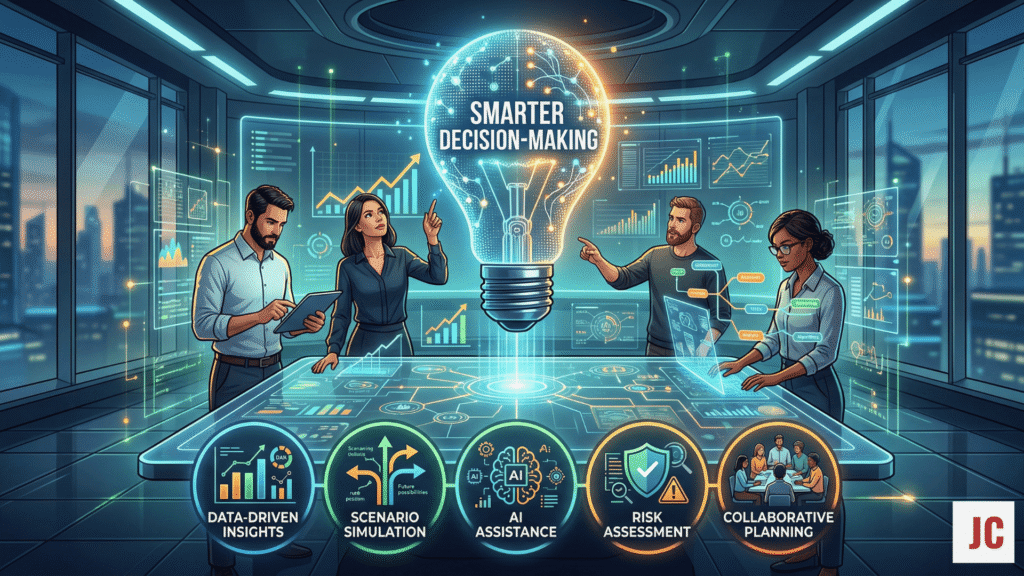
Another major impact of AI in 2026 is its ability to enhance decision-making. AI systems can analyze massive volumes of data within seconds something humans simply cannot achieve at the same scale or speed.
Today, businesses increasingly rely on AI to support critical decisions, including:
- Predicting market trends with greater accuracy
- Analyzing customer behavior to improve targeting and personalization
- Generating financial forecasts based on real-time data
As a result, organizations can make faster, more informed decisions that are backed by data reducing uncertainty and minimizing risk in an increasingly competitive landscape.
3. The Rise of AI Assistants
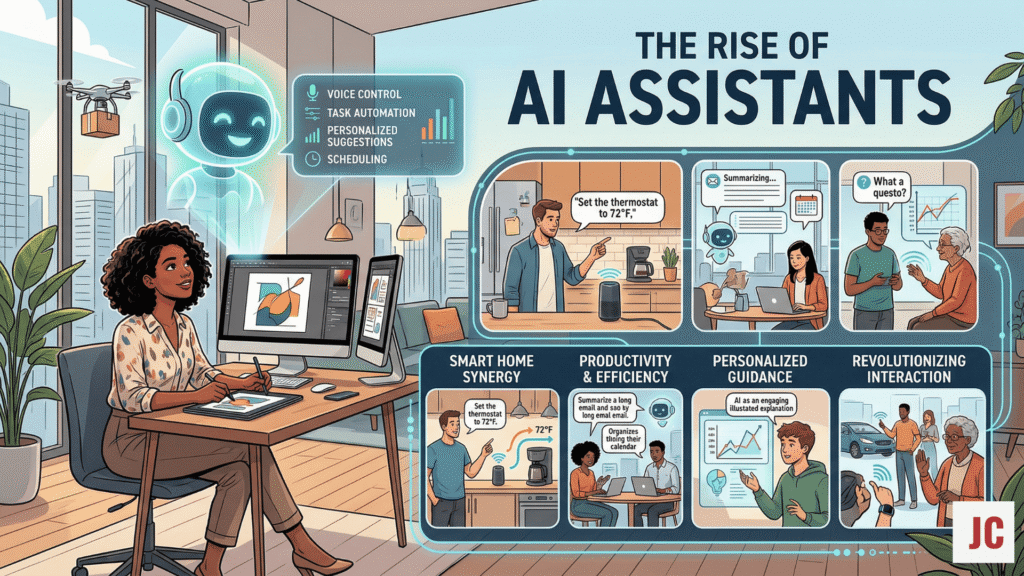
In 2026, AI assistants have become an essential part of everyday work life. From communication to content creation and software development, these tools are transforming how professionals get work done.
Common AI-powered assistants include
- Chatbots that handle customer support and internal queries
- Writing assistants that help draft emails, reports, and content
- Coding copilots that speed up development and reduce errors
Rather than replacing employees, AI is acting as a powerful partner. Professionals are no longer working alone they’re collaborating with AI to work faster, smarter, and more efficiently than ever before.
4. Remote Work Becomes More Powerful
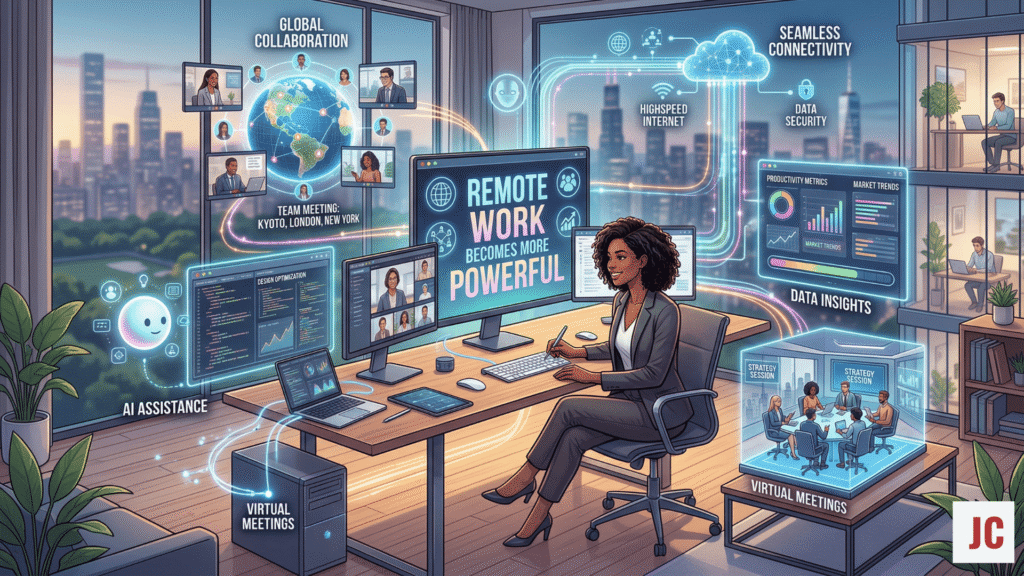
AI has taken remote work to the next level, making it more efficient, connected, and productive than ever before. In 2026, distributed teams are no longer limited by distance AI helps bridge the gap and streamline collaboration across time zones.
How AI supports remote teams
- Real-time transcription and translation for seamless global communication
- Smart meeting summaries that capture key insights and action points
- AI-powered project management tools that track progress and optimize workflows
As a result, teams can collaborate effectively from anywhere in the world eliminating communication barriers and enabling a truly global workforce.
5. New Jobs Are Being Created
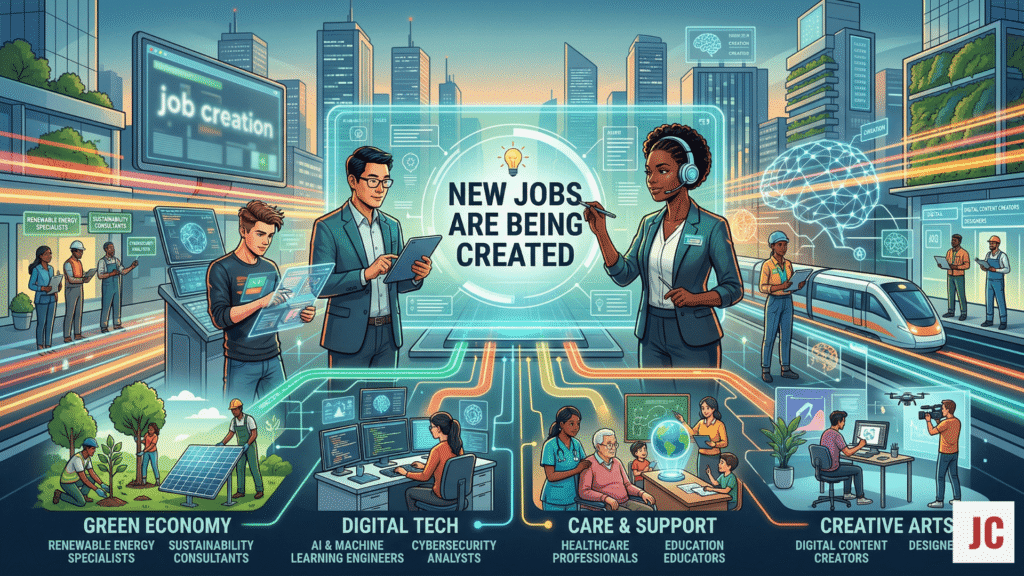
A common concern surrounding AI is whether it will replace jobs. In 2026, the reality is far more balanced. While certain repetitive roles are being automated, AI is also driving the creation of entirely new job opportunities across multiple industries.
Emerging AI-driven roles include
- AI specialists who design and manage intelligent systems
- Prompt engineers who optimize how humans interact with AI tools
- Data analysts who turn raw data into actionable insights
- AI ethics consultants who ensure responsible and fair use of AI
Rather than eliminating work, AI is reshaping the job market opening up new career paths and redefining the skills needed for the future of work.
6. Skills Matter More Than Degrees
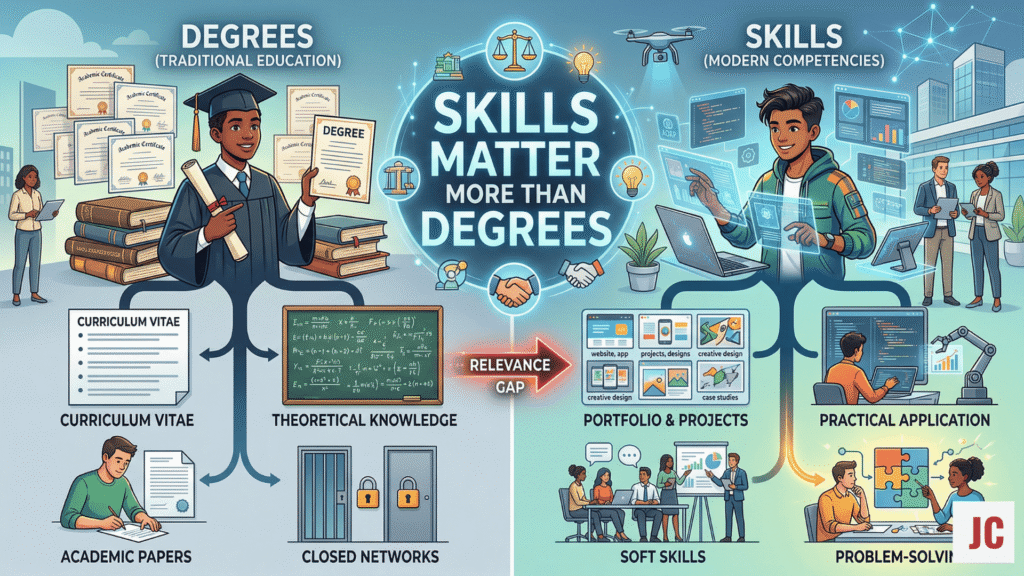
AAI is redefining what employers truly value in the modern workforce. In 2026, companies are shifting away from focusing solely on academic degrees and placing greater emphasis on practical, future-ready skills.
Key skills in demand include
- Problem-solving abilities to tackle complex challenges
- Creativity to generate innovative ideas and solutions
- Adaptability to thrive in a rapidly changing environment
- Digital literacy to effectively use modern tools and technologies
Most importantly, the ability to work alongside AI is becoming one of the most valuable skills in today’s job market. Those who can leverage AI tools effectively will have a significant advantage in building successful and future-proof careers.
7. Personalized Work Experiences
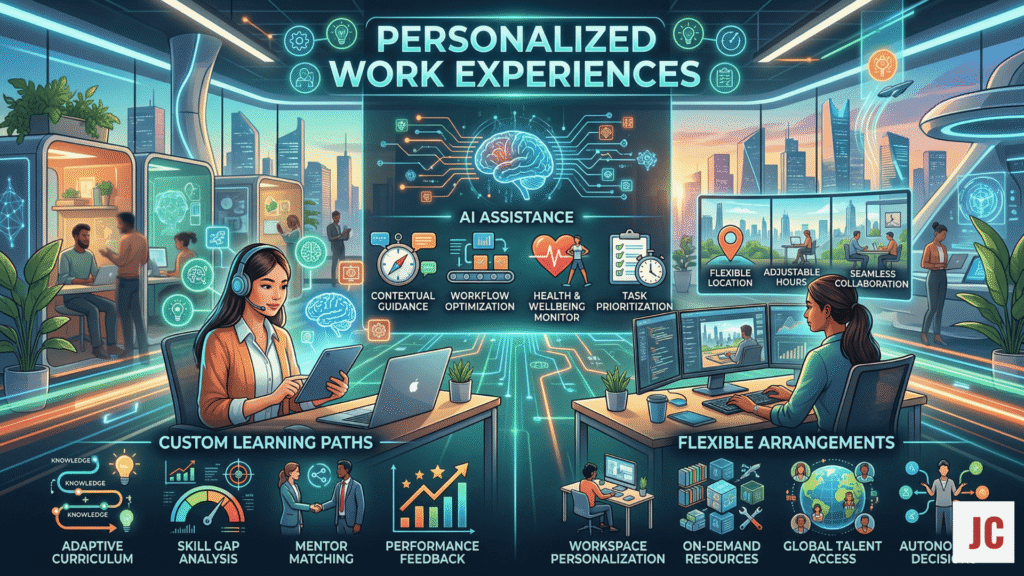
AI is also transforming how employees experience their work on a personal level. In 2026, workplaces are becoming more tailored, flexible, and responsive to individual needs thanks to intelligent systems that adapt to each employee.
Examples include
- Personalized learning and training programs based on individual strengths and skill gaps
- AI-driven performance insights that provide real-time feedback and improvement suggestions
- Customized career development paths aligned with personal goals and organizational needs
As a result, work is becoming more personalized than ever helping employees grow faster, stay engaged, and reach their full potential in a way that fits them best.
8. Increased Productivity Across Industries
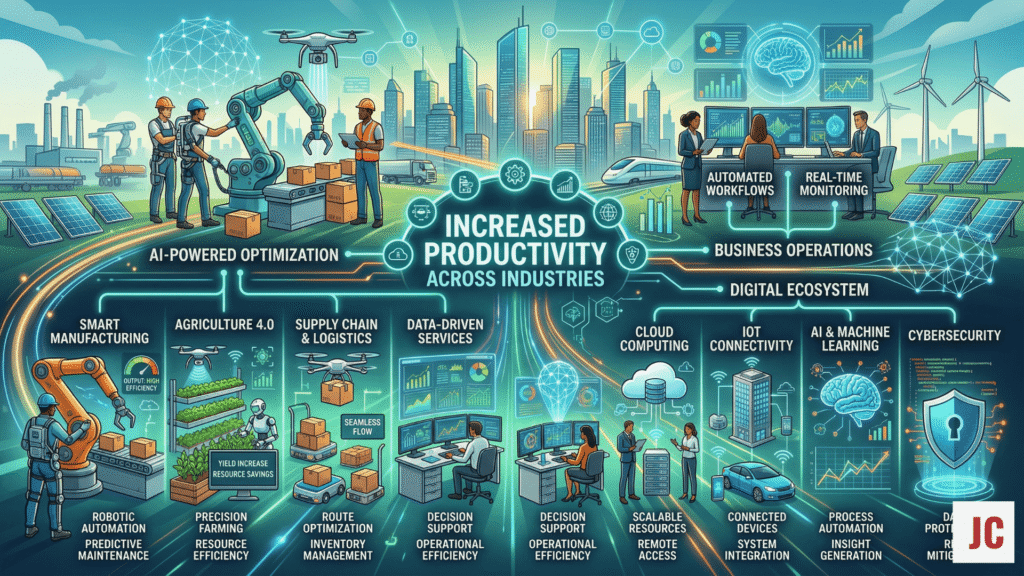
From healthcare to finance to manufacturing, AI is significantly boosting productivity across virtually every industry. In 2026, organizations are leveraging AI to streamline operations, reduce manual effort, and deliver faster, more accurate results.
Real-world impact includes:
- Faster and more accurate diagnosis in healthcare through AI-powered analysis
- Automated trading systems in finance that react instantly to market changes
- Smart factories in manufacturing that optimize production and reduce downtime
As a result, businesses can achieve more with fewer resources improving efficiency, reducing costs, and gaining a competitive edge in an increasingly data-driven world.
Challenges of AI in the Workplace
Despite its many benefits, AI also introduces several challenges that organizations must carefully manage. As AI becomes more deeply integrated into the workplace, addressing these concerns is essential for sustainable and responsible growth.
Key challenges include
- Job displacement concerns as certain roles become automated
- Data privacy and security issues related to handling large volumes of sensitive information
- Over-reliance on automation, which may reduce critical human oversight
- Ethical concerns surrounding bias, transparency, and accountability in AI systems
To fully unlock the potential of AI, organizations must strike a balance between innovation and responsibility ensuring that technology is used in a way that benefits both businesses and society as a whole.
The Future of Work with AI
The Future of Work with AI
Looking ahead, the workplace will continue to evolve with AI at its core reshaping how we collaborate, innovate, and grow. As technology advances, AI will become even more deeply embedded in everyday workflows, transforming not just tasks, but the entire structure of work itself.
What to expect in the future
- Deeper human-AI collaboration, where AI enhances human capabilities rather than replacing them
- Fully AI-integrated workflows that streamline operations from end to end
- Continuous learning environments powered by AI-driven insights and personalized training
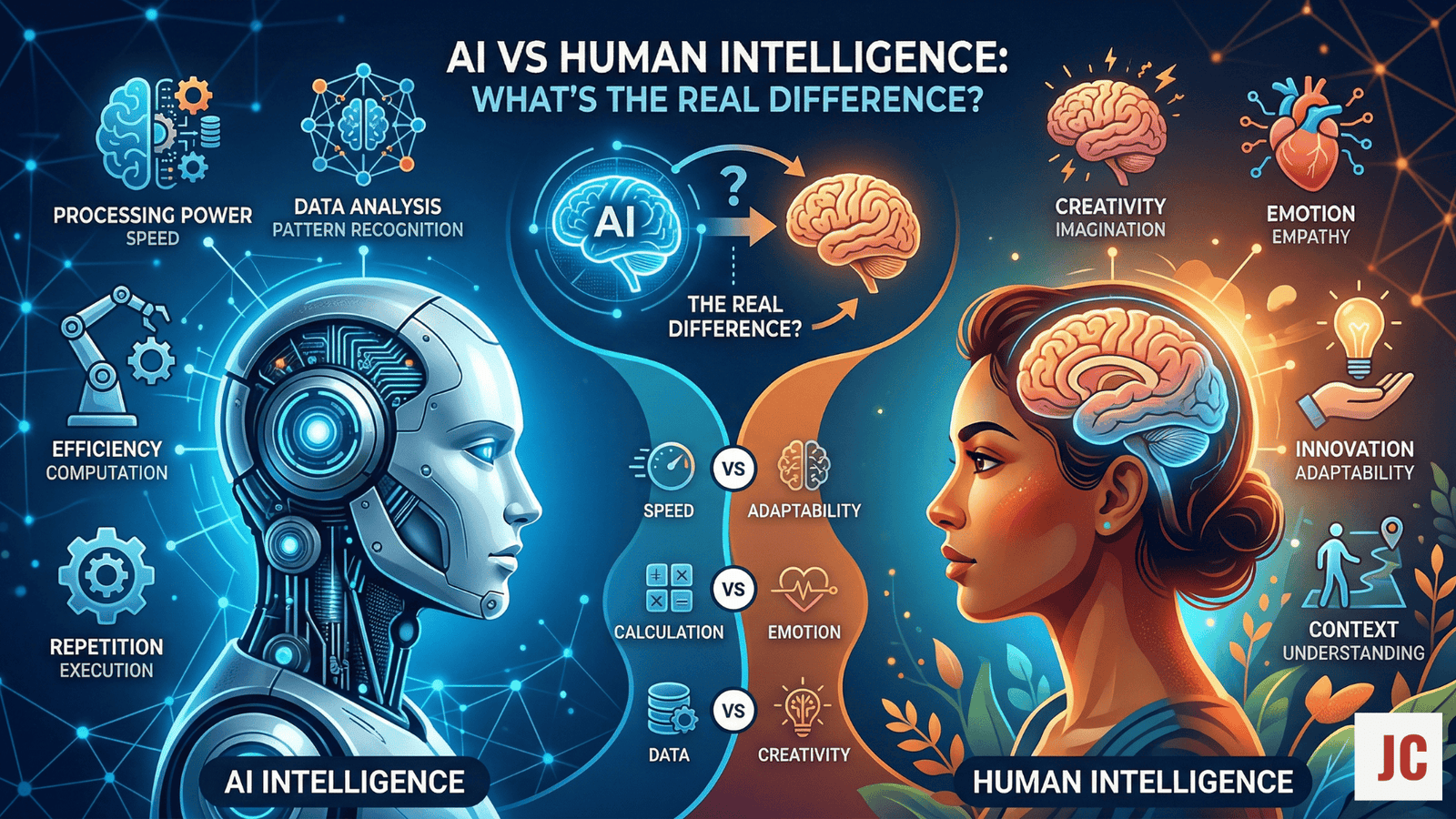
The future of work is not about “AI vs humans.”
It’s about AI and humans working together combining machine efficiency with human creativity to unlock new levels of productivity and innovation.
Final Thoughts
Artificial Intelligence is transforming the workplace in 2026 in ways that were once unimaginable. From automating routine tasks to enhancing decision-making and unlocking new career opportunities, AI is reshaping how we work at every level.
But with these advancements comes a clear challenge the need to adapt. As AI continues to evolve, so must the skills, mindset, and strategies of today’s workforce.
The key to success is not competing against AI, but learning how to collaborate with it effectively.
Those who embrace AI as a tool for growth and innovation will not only keep up with the future of work they will lead it.
About The Author