Artificial Intelligence (AI) is no longer a futuristic concept it’s already part of your daily life. Whether you realize it or not, AI is quietly shaping how you work, communicate, shop, and even relax.
From personalized recommendations to smart assistants, AI has become the invisible engine powering modern convenience. In this article, we’ll break down how AI is changing everyday life, using real-world examples you experience every day.
What Is AI (In Simple Terms)?
Artificial Intelligence, or AI, is technology that allows machines and software to perform tasks that normally require human thinking. This can include learning from information, recognizing patterns, understanding language, solving problems, and even making decisions.
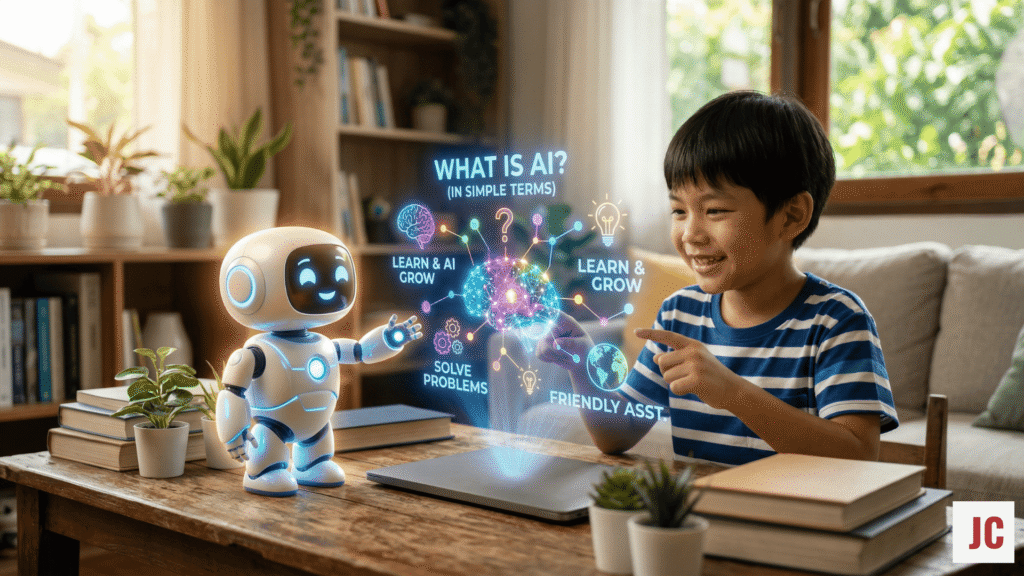
In simple terms, AI helps computers become more “intelligent” instead of just following basic commands. Traditional software works by following fixed rules written by humans. AI is different because it can improve its performance by analyzing data and finding patterns on its own.
For example, when you watch videos on YouTube, shop online, use Google Maps, or unlock your phone with facial recognition, AI is often working behind the scenes. It studies your behavior, compares it with large amounts of data, and then makes smart suggestions or predictions.
Simple idea
The more data AI processes, the better it can learn. Over time, this allows AI systems to become more accurate, faster, and more useful in everyday situations.
That is why AI is no longer just a futuristic concept. It is already part of daily life, helping people save time, make better decisions, and enjoy more personalized digital experiences.
Real examples
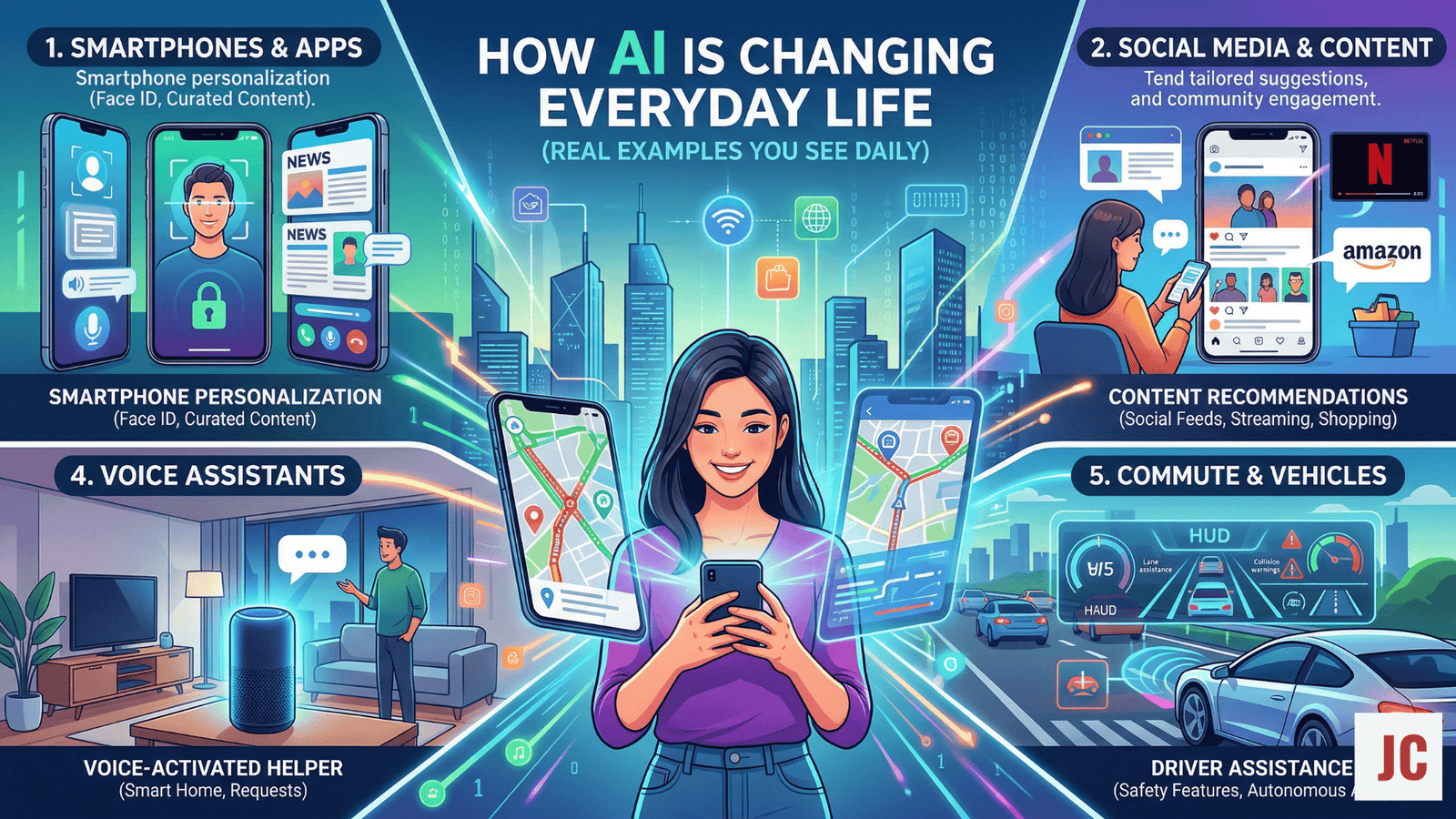
- Face recognition to unlock your phone
- AI cameras that enhance photos automatically
- Predictive text when typing messages
- Voice assistants like Siri or Google Assistant
👉 Impact
AI makes your phone smarter, faster, and more personalized to you.
Have you ever noticed how apps seem to “know” what you want?
That’s AI at work.
Real examples
- Netflix recommends movies based on your watch history
- YouTube suggests videos you’re likely to click
- Spotify creates personalized playlists
👉 Impact
AI keeps you engaged by delivering content tailored specifically to your interests.
3. AI in Online Shopping
AI is transforming how you shop online.
Real examples
- Product recommendations on Amazon
- Personalized ads on social media
- Chatbots answering customer questions instantly
👉 Impact
Shopping becomes faster, more convenient, and highly personalized.
4. AI in Navigation & Transportation
AI helps you get from point A to point B more efficiently.
Real examples
- Google Maps predicts traffic and suggests faster routes
- Ride-hailing apps optimize driver routes
- Real-time rerouting based on road conditions
👉 Impact
You save time, fuel, and reduce stress while traveling.
5. AI in Social Media
Social media platforms rely heavily on AI to control what you see.
Real examples
- Facebook news feed ranking
- Instagram Explore page suggestions
- TikTok “For You” page algorithm
👉 Impact
AI decides which content gets your attention—and keeps you scrolling.
6. AI in Work & Productivity
AI is changing how people work across every industry.
Real examples
- AI writing tools like ChatGPT
- Email auto-complete in Gmail
- AI-powered data analysis tools
👉 Impact
AI increases productivity and helps people work smarter, not harder.
7. AI in Smart Homes & IoT
AI is making homes more intelligent and automated.
Real examples
- Smart lights that adjust automatically
- Smart speakers that respond to voice commands
- Security cameras with AI detection
👉 Impact
Homes become more efficient, secure, and convenient.
Why AI Feels “Invisible”
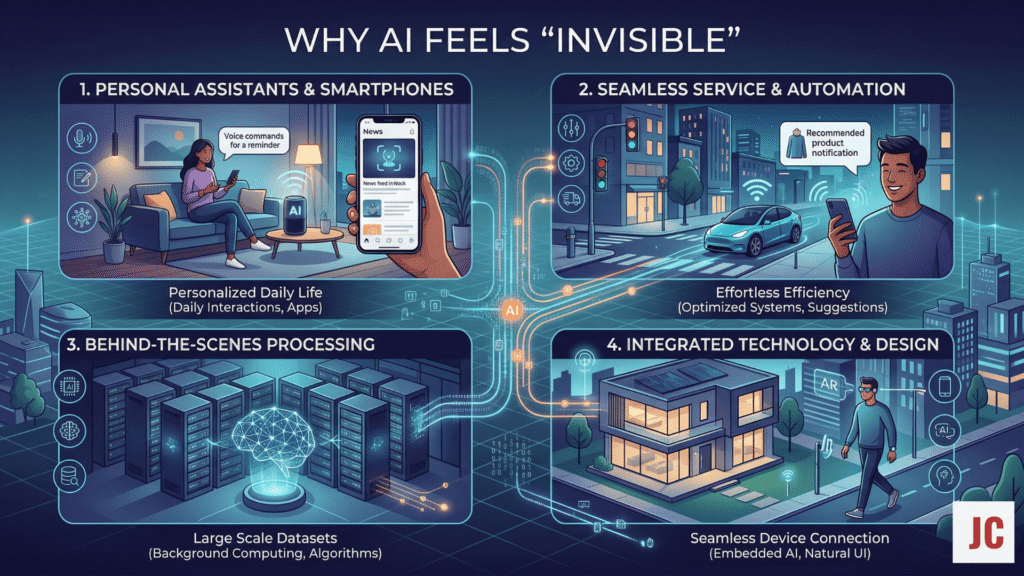
One of the most interesting things about AI is that you rarely notice it.
That’s because AI works best when it’s seamless—helping you without interrupting your experience.
👉 You don’t think “AI is working”
👉 You just feel “this is easy”
The Future of AI in Daily Life
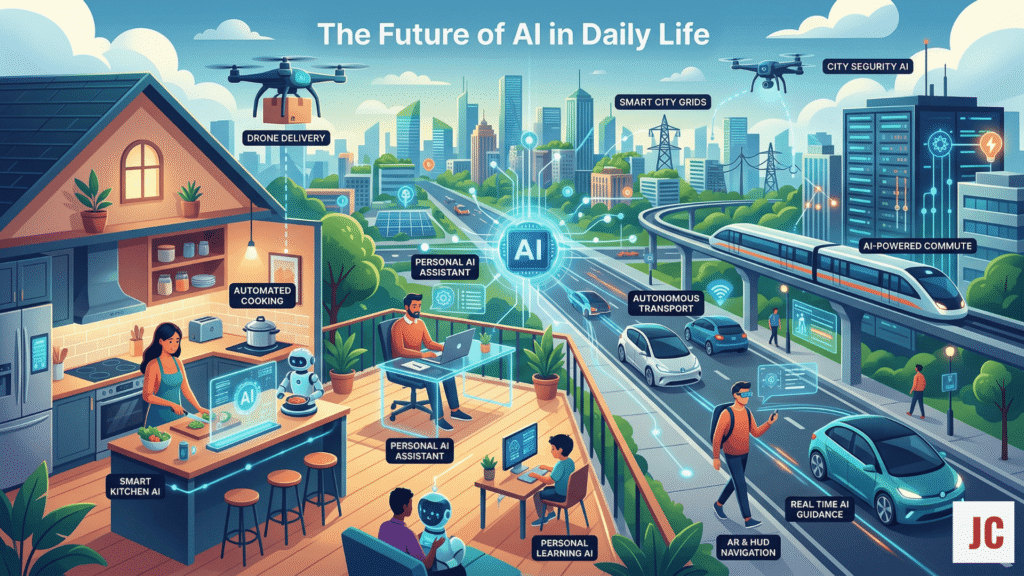
AI is only getting more powerful.
In the near future, you can expect
- More personalized experiences
- Smarter assistants
- Automation in more areas of life
- AI integration in education, healthcare, and finance
👉 Key idea
AI won’t replace your life—it will enhance it.
Final Thoughts
Artificial Intelligence is no longer just a future concept or a technology reserved for experts. It has already become a part of everyday life, influencing the way people work, shop, communicate, travel, and consume information. In many cases, AI operates so smoothly in the background that most people do not even realize how often they interact with it.
From smartphones and voice assistants to shopping suggestions, navigation apps, and social media feeds, AI is quietly making daily life faster, smarter, and more convenient. It helps save time, personalize experiences, and simplify tasks that once required more effort.
That is why the conversation around AI is changing. The question is no longer simply, “What is AI?” Instead, the more important question is, “How can AI help improve your daily life?”
As AI continues to grow, understanding how it fits into everyday routines will become more valuable than ever. The people who benefit most may not be the ones who build AI, but the ones who learn how to use it wisely.
About The Author