In today’s fast-changing digital world, one question continues to spark curiosity and debate: AI vs Human Intelligence — what’s the real difference?
As artificial intelligence becomes more advanced and increasingly woven into everyday life, understanding how it compares to human intelligence matters more than ever. While AI can process data, recognize patterns, and perform tasks at remarkable speed, the human mind brings creativity, emotion, judgment, and self-awareness to the table.
In this guide, we’ll break down the key differences between AI and human intelligence in a simple, clear, and SEO-friendly way—so you can better understand where each one shines, where each one falls short, and what that means for the future.
What Is Artificial Intelligence (AI)?
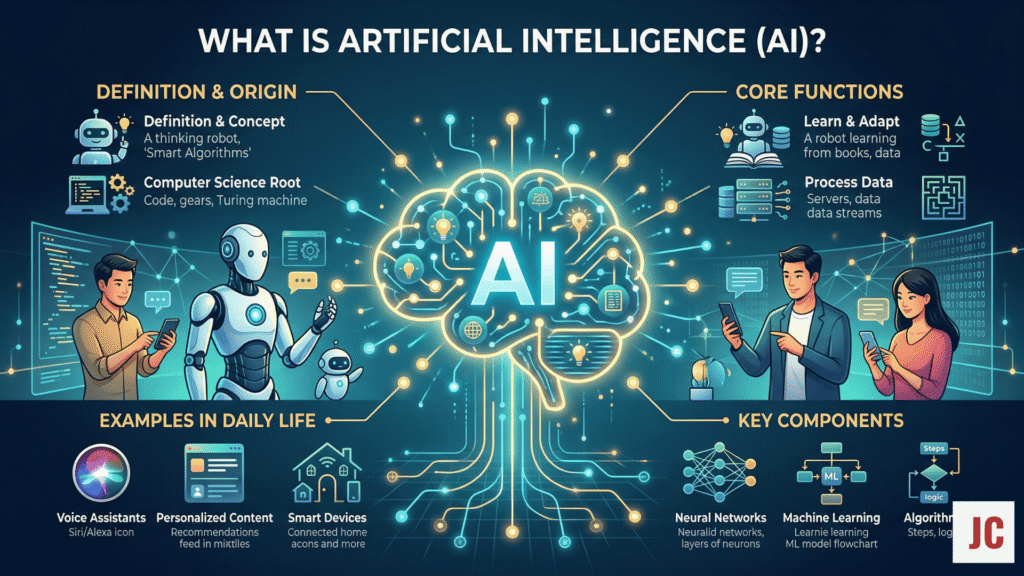
Artificial Intelligence (AI) refers to machines or software designed to perform tasks that normally require human intelligence.
These tasks include
- Learning from data
- Recognizing patterns
- Making decisions
- Understanding language
Popular examples include
- Chatbots like ChatGPT
- Recommendation systems on YouTube and Netflix
- Voice assistants like Siri
AI is powerful because it can process massive amounts of data quickly and accurately.
What Is Human Intelligence?
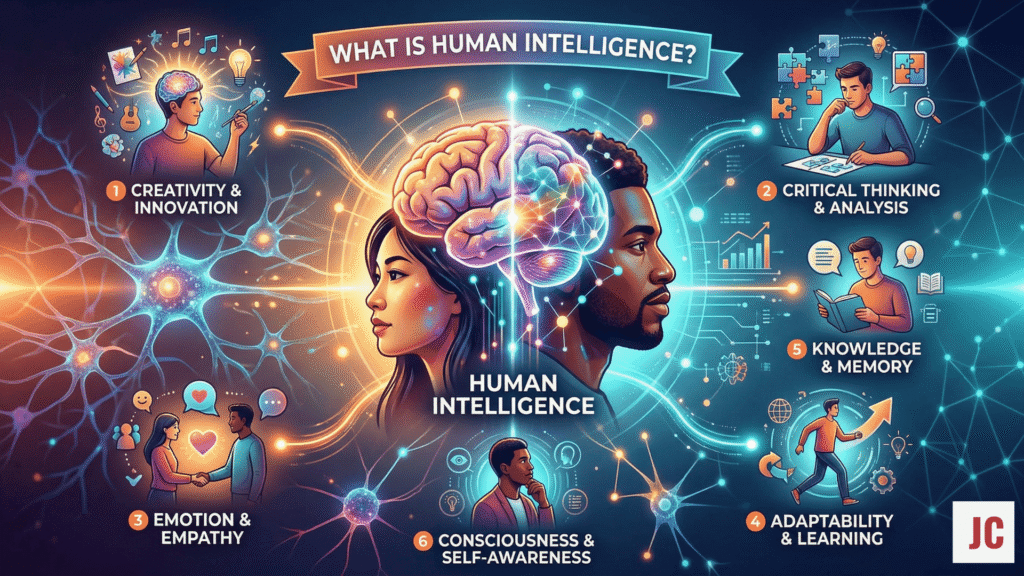
Human intelligence is the natural ability of the human brain to think, learn, understand, and adapt.
It includes
- Emotional understanding
- Creativity
- Critical thinking
- Moral judgment
- Self-awareness
Unlike AI, human intelligence is shaped by experiences, emotions, and consciousness.
Humans don’t just process information — they feel, interpret, and create meaning.
AI vs Human Intelligence: Key Differences
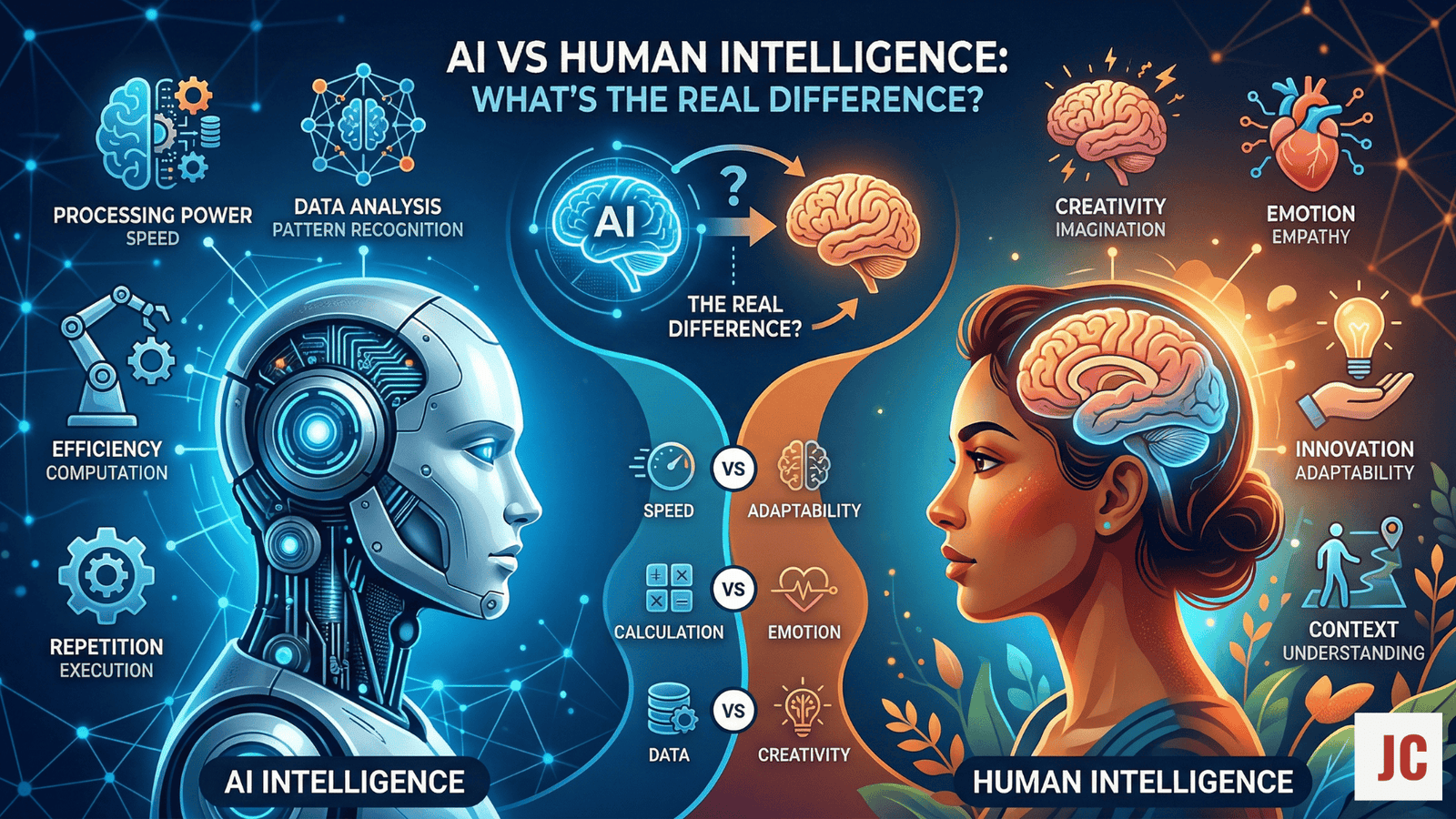
1. Learning Ability
- AI: Learns from data and algorithms
- Humans: Learn from experience, mistakes, and emotions
AI can learn faster in specific tasks, but humans learn in a more flexible and deeper way.
2. Creativity
- AI: Generates content based on patterns
- Humans: Create original ideas from imagination
AI can write, draw, and compose — but it still relies on existing data. Humans can invent completely new concepts.
3. Emotional Intelligence
- AI: Cannot truly feel emotions
- Humans: Understand and experience emotions
This is one of the biggest differences. Humans can empathize, build relationships, and make decisions based on feelings.
4. Decision-Making
- AI: Data-driven and logical
- Humans: Influenced by logic, emotion, and ethics
AI makes decisions based on probabilities, while humans consider values, culture, and consequences.
5. Speed and Efficiency
- AI: Extremely fast and consistent
- Humans: Slower but more adaptable
AI can analyze millions of data points in seconds. Humans take longer but can handle unexpected situations better.
6. Adaptability
- AI: Limited to training data
- Humans: Highly adaptable in new environments
Humans can think outside the box, while AI struggles with unfamiliar scenarios.
Can AI Replace Human Intelligence?
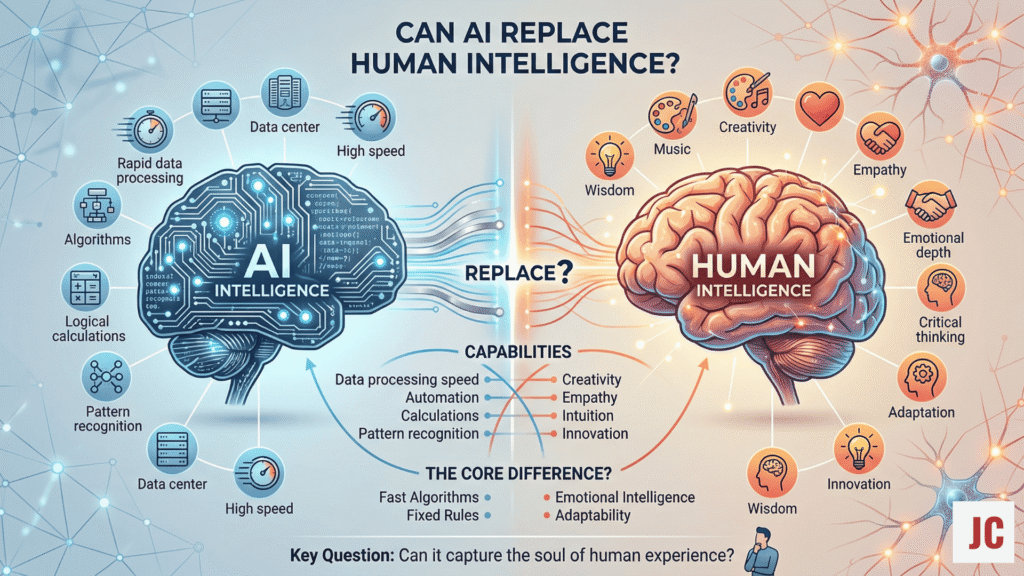
The short answer: No — but it can complement it.
AI is excellent at
- Repetitive tasks
- Data analysis
- Automation
Humans excel at
- Creativity
- Leadership
- Emotional connection
The future is not AI vs Humans — it’s AI + Humans working together.
Real-Life Examples You See Every Day
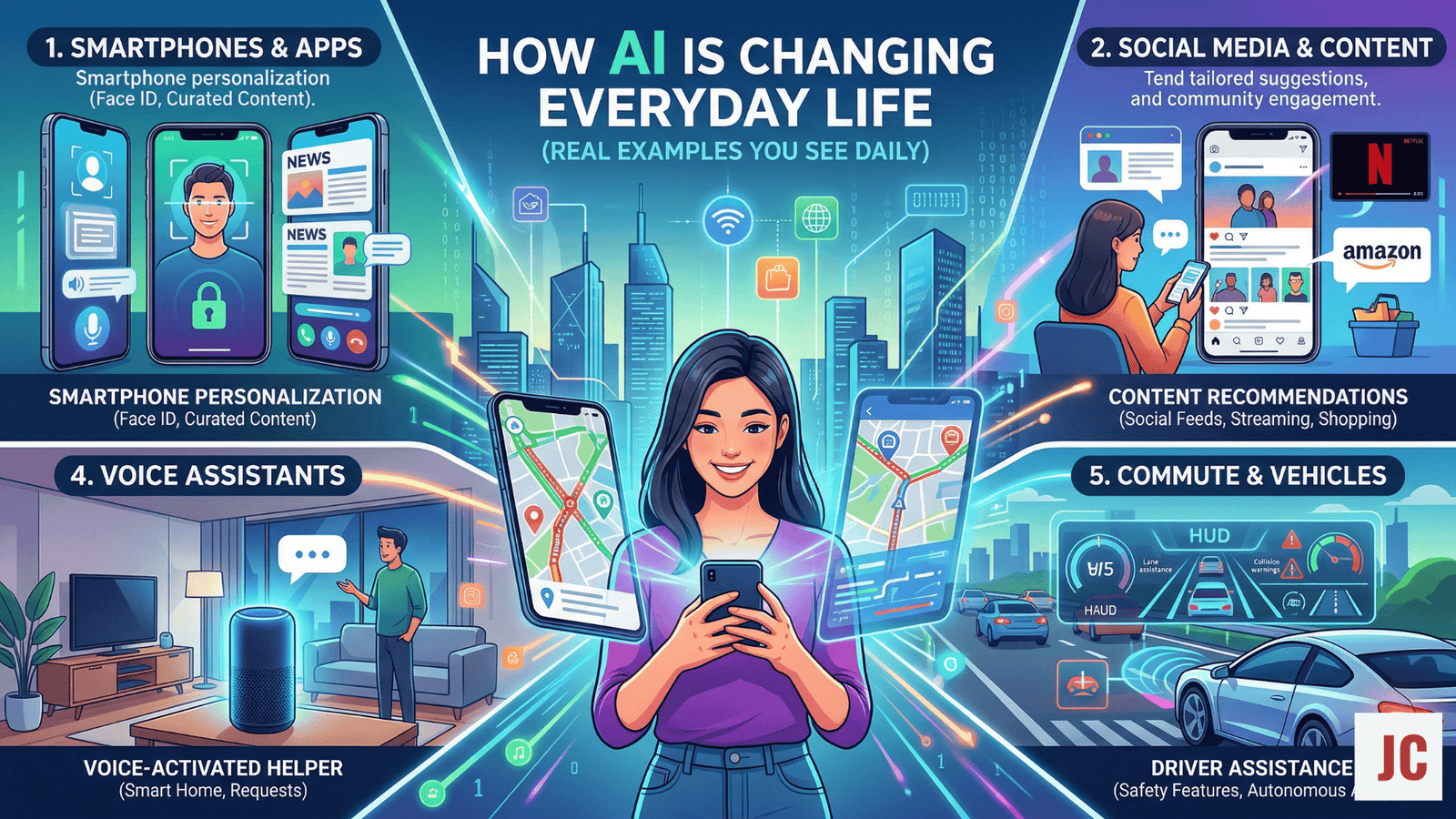
- AI recommends videos on YouTube
- AI suggests products on Amazon
- AI helps doctors analyze medical data
- Humans make final decisions in business, healthcare, and relationships
This combination shows how both types of intelligence play different but important roles.
Why This Difference Matters
Understanding AI vs human intelligence helps you:
- Prepare for future jobs
- Use AI tools more effectively
- Make smarter decisions in a tech-driven world
As AI continues to evolve, the most valuable skill will be knowing how to work with it — not compete against it.
Final Thoughts
There is no true “winner” in the debate between AI and human intelligence. Each has its own strengths, and each plays a very different role.
AI offers speed, scale, and the power to process massive amounts of data.
Humans bring creativity, emotion, judgment, and meaning.
A simple way to understand it is this:
AI is the engine. Humans are the driver.
AI can accelerate tasks, uncover patterns, and improve efficiency, but it still depends on human direction, values, and purpose. On the other hand, humans can achieve far more when supported by AI tools that save time and expand what is possible.
In the end, the real advantage does not come from choosing one over the other.
It comes from understanding how AI and humans can work together to create smarter decisions, better ideas, and a more powerful future.
About The Author