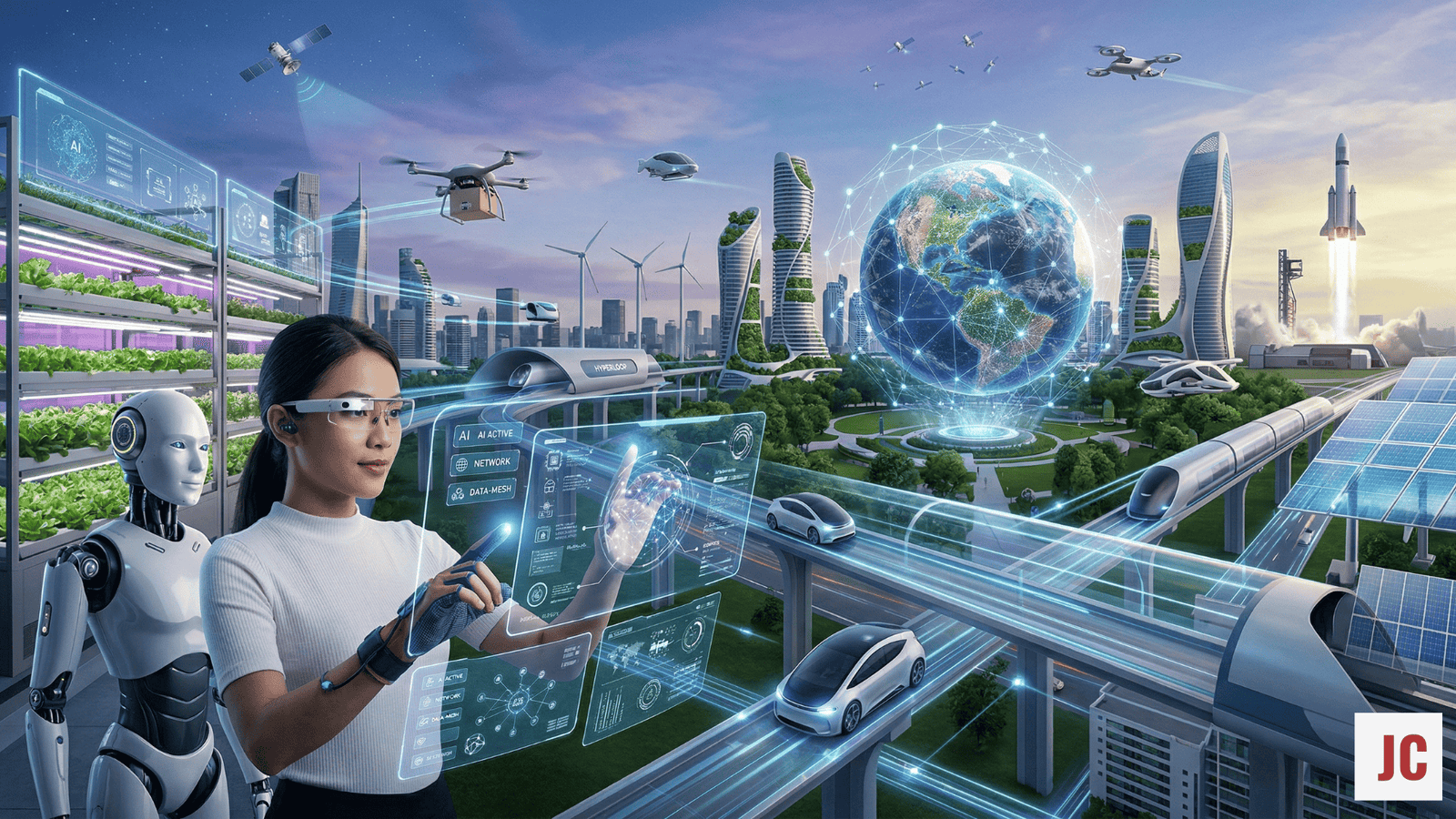
Technology is no longer just a part of our lives — it has become the foundation of how we live, work, and think in the modern world.
In today’s digital age, technology is everywhere. From the moment we wake up and check our smartphones, scroll through social media, or rely on AI-powered recommendations, we are constantly interacting with technology without even realizing it. It influences how we communicate, how we make decisions, how we earn money, and even how we spend our free time.
The future of technology is not something far away — it is happening right now.
Artificial Intelligence (AI), automation, cloud computing, and digital platforms are rapidly transforming industries and reshaping everyday life. Businesses are becoming smarter, jobs are evolving, and new opportunities are being created faster than ever before. At the same time, people who fail to adapt risk being left behind in an increasingly competitive and technology-driven world.
But here’s the real question you need to ask yourself:
Are you using technology to improve your life… or is technology controlling your time, attention, and decisions?
This is one of the most important questions in the digital era.
Many people consume technology passively — endlessly scrolling, watching, and reacting — while only a few truly understand how to leverage it for growth, productivity, and long-term success. The difference between these two groups is what separates those who fall behind from those who stay ahead.
This guide is designed to help you understand the bigger picture.
In this evergreen guide to the future of technology, you will learn what technology really means today, how it continues to evolve, and why it will always remain one of the most powerful forces shaping our world. More importantly, you’ll discover how you can adapt, grow, and take advantage of technology — instead of being overwhelmed by it.
No matter when you read this — today, next year, or even five years from now — the core principles of technology will remain the same.
Because while tools may change…
The way technology transforms human life never does.
What Is Technology Today?
Technology today is not just about devices.
It’s about systems that learn, adapt, and improve over time.
Some key examples:
- Artificial Intelligence (AI)
- Cloud Computing
- Blockchain
- Automation
- Internet of Things (IoT)
- Technology is anything that makes human life easier, faster, or smarter.
Why Technology Keeps Evolving (And Always Will)
Technology never stops.
Why?
Because humans never stop wanting:
- Faster results
- Less effort
- Better experiences
This creates a cycle
- Problem appears
- Technology solves it
- New problems emerge
- New technology is created
This loop will continue forever.
That’s why tech content like this is evergreen — the tools may change, but the pattern stays the same.
The 5 Core Technologies That Will Always Matter
Even as trends change, these 5 areas will always be important:
1. Artificial Intelligence (AI)
Artificial Intelligence (AI) is one of the most powerful and transformative technologies in the modern world. At its core, AI refers to machines and systems that can learn from data, recognize patterns, and make decisions — often in ways that mimic human intelligence.
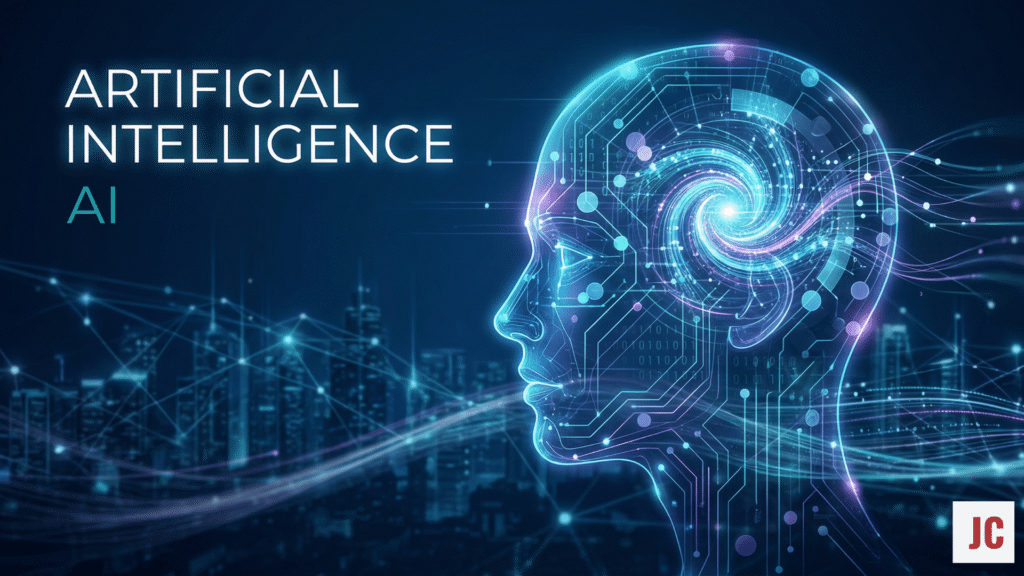
Unlike traditional software that follows fixed instructions, AI systems improve over time. The more data they receive, the better they become. This ability to learn and adapt is what makes AI so important in shaping the future of technology.
Today, AI is no longer something futuristic — it is already deeply embedded in our daily lives.
You interact with AI more often than you think.
Every time you open an app, search online, or receive a recommendation, AI is working behind the scenes to personalize your experience.
Common Uses of AI in Everyday Life
Chatbots and Virtual Assistants
AI-powered chatbots are widely used in customer service, websites, and messaging platforms. They can answer questions, solve problems, and provide support instantly — without human intervention. Examples include virtual assistants like Siri, Google Assistant, and AI chat systems used by businesses.
Recommendation Systems
Platforms like Netflix, YouTube, Spotify, and Amazon use AI to analyze your behavior — what you watch, click, or purchase — and recommend content tailored specifically to you. This is why your feed often feels “perfectly matched” to your interests.
Self-Driving and Smart Systems
AI plays a major role in autonomous vehicles and smart transportation. Self-driving cars use AI to process real-time data from cameras and sensors, allowing them to recognize objects, avoid obstacles, and make driving decisions safely.
2. Cloud Computing
Cloud Computing is one of the most important technologies behind the modern digital world. Instead of storing data, applications, and systems on a single computer or local server, cloud computing allows everything to be stored and accessed online — anytime, anywhere.
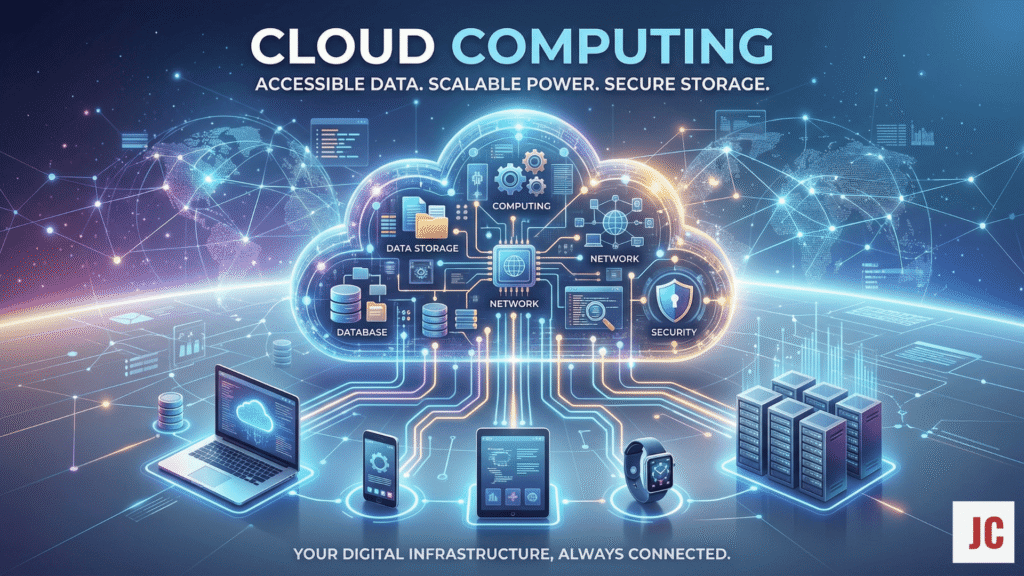
In simple terms, the cloud means that your data does not “live” on your device anymore. It lives on powerful remote servers that are connected through the internet.
This shift has completely changed how individuals, businesses, and organizations operate in the future of technology.
You no longer need a powerful computer — you just need an internet connection.
Common Examples of Cloud Computing
Google Drive
A cloud storage platform that allows you to store files, documents, and photos online. You can access your data from any device, share it instantly, and collaborate with others in real time.
Amazon Web Services (AWS)
One of the largest cloud platforms in the world. AWS provides infrastructure, storage, databases, and computing power for websites, applications, and large-scale systems. Many of the apps and websites you use daily are powered by AWS behind the scenes.
Microsoft Azure
A cloud computing service used by businesses to build, manage, and deploy applications globally. It supports everything from simple web apps to advanced AI and enterprise systems.
3. Blockchain
Blockchain is a revolutionary technology that is changing how data is stored, verified, and trusted in the digital world. At its core, blockchain is a system that records data in a secure, transparent, and decentralized way, making it extremely difficult to alter or manipulate.

Unlike traditional databases that are controlled by a single authority (such as a company or server), blockchain operates on a distributed network. This means that data is stored across multiple computers (nodes), and every transaction is verified by the network before being permanently recorded.
Once data is written on the blockchain, it cannot be easily changed.
This is what makes blockchain one of the most trusted systems in the future of technology.
Most Common Uses of Blockchain
Cryptocurrency
Blockchain is best known as the foundation of cryptocurrencies like Bitcoin and Ethereum. It enables digital money to exist without banks or intermediaries, allowing people to send and receive payments globally in a secure and transparent way.
Smart Contracts
Smart contracts are self-executing programs stored on the blockchain. They automatically carry out actions when certain conditions are met — without the need for a middleman. This can be used for agreements, transactions, and even complex business logic.
4. Automation
Automation is one of the most practical and impactful technologies in today’s world. At its core, automation means using machines, software, or systems to perform repetitive tasks automatically — without constant human involvement.
Instead of doing the same task over and over again, automation allows those processes to run on their own, saving time, reducing errors, and increasing efficiency.
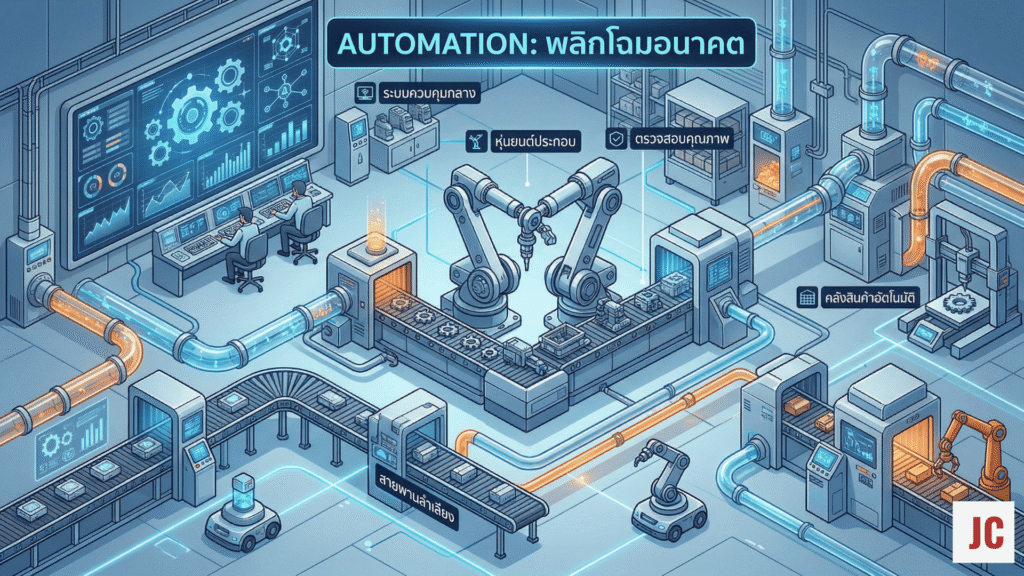
In the future of technology, automation is not just an advantage — it is becoming a necessity.
If a task can be repeated, it can be automated.
Common Examples of Automation
Factory Robots
In manufacturing industries, robots are widely used to handle tasks such as assembling products, packaging, and quality control. These machines can work faster, more consistently, and without fatigue compared to humans.
Automated Email Systems
Businesses use automation tools to send emails automatically based on user actions. For example:
- Welcome emails when someone signs up
- Marketing campaigns sent at scheduled times
- Follow-up emails after a purchase
This helps businesses communicate at scale without manual effort.
5. Internet of Things (IoT)
The Internet of Things (IoT) refers to a network of physical devices connected to the internet that can collect, share, and exchange data in real time. These devices are embedded with sensors, software, and connectivity, allowing them to communicate with each other and operate intelligently.
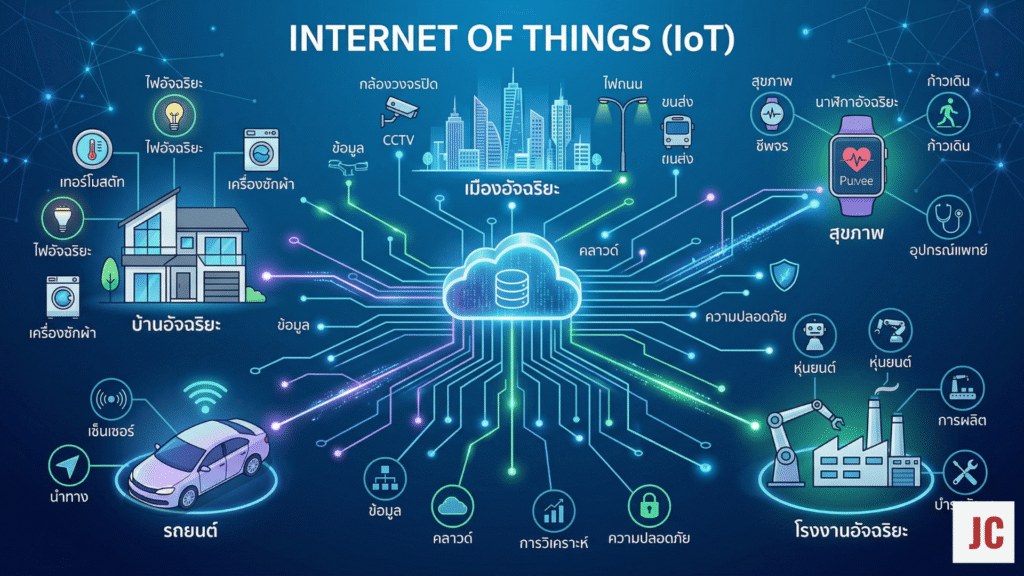
In simple terms, IoT turns everyday objects into “smart” devices.
Instead of working independently, devices can now interact, respond, and automate actions based on data — making life more convenient, efficient, and connected.
In the future of technology, IoT plays a key role in building a world where everything is interconnected.
It’s not just devices anymore — it’s an ecosystem.
Common Examples of IoT
Smart Homes
IoT enables homes to become intelligent environments. Devices such as smart lights, thermostats, security cameras, and voice assistants can be controlled remotely through smartphones or automated based on user behavior.
For example:
- Lights turn on automatically when you enter a room
- Air conditioning adjusts based on temperature
- Security systems send alerts in real time
Smart Watches and Wearables
Wearable devices like smartwatches track health data such as heart rate, steps, sleep patterns, and activity levels. This data can be analyzed to provide insights and improve personal health and fitness.
How Technology Is Changing Everyday Life
Technology is no longer something that only affects large corporations or tech companies — it directly impacts your daily life, your decisions, and your future opportunities.
Whether you realize it or not, technology is shaping how you work, how you earn money, and how you learn new skills in a rapidly changing digital world.
The future of technology is not just about innovation — it’s about transformation at every level of society.
Work
The way we work has changed dramatically.
Remote work is no longer a trend — it has become a standard in many industries. People can now work from anywhere in the world, collaborate with global teams, and build careers without being tied to a physical office.
At the same time, Artificial Intelligence (AI) is increasing productivity. Tasks that once took hours can now be completed in minutes with the help of smart tools, automation systems, and digital platforms.
The biggest shift in work is this:
Skills now matter more than degrees.
Employers are increasingly valuing what you can do — not just what you studied. Practical knowledge, adaptability, and the ability to use technology effectively are becoming the most valuable assets in the modern workforce.
Money
Technology has completely transformed how we handle money.
Traditional systems are being replaced or enhanced by digital alternatives. Today, people can send, receive, and manage money instantly through mobile apps and online platforms.
Digital payments have become the norm — faster, more convenient, and accessible to anyone with a smartphone.
At the same time, cryptocurrencies and blockchain technology have introduced a new financial system that operates without traditional banks. This has opened up new opportunities for investing, trading, and building wealth in the digital economy.
Another major shift:
Anyone can start an online business.
With the help of technology, individuals can create income streams through e-commerce, content creation, freelancing, and digital services — often with minimal startup costs.
Learning
Education has changed more in the last decade than in the previous hundred years.
You no longer need to attend a traditional classroom to learn valuable skills. Platforms like YouTube, online courses, and digital learning tools have made education accessible to anyone, anywhere.
YouTube has become a “free university.”
People can learn everything from programming and design to business and marketing — often for free.
In addition, AI-powered tools are now acting as personal tutors. They can explain concepts, answer questions, and guide learning in a way that is personalized and efficient.
The Biggest Mistake People Make With Technology
Most people consume tech…
But don’t use it.
They:
- Scroll social media
- Watch content
- Follow trends
But never build, create, or monetize.
The real advantage comes from using tech, not just watching it.
How to Stay Ahead in the Tech World
You don’t need to know everything.
You just need to follow this system:
1. Learn continuously
Even 15–30 minutes per day is enough.
2. Focus on fundamentals
Don’t chase trends — understand concepts.
3. Build something
- Website
- App
- Automation tool
4. Use AI as a partner
Not a replacement.
Future Trends (That Will Keep Coming Back)
Even if specific tools change, these trends will repeat:
- AI getting smarter
- Automation replacing routine jobs
- Digital economy growing
- Remote work expanding
- Personal branding becoming essential
Tools change. Patterns don’t.
Final Thoughts
Technology is not something you can ignore.
It will continue to evolve — with or without you.
But here’s the key:
You don’t need to chase every new trend
You just need to understand how technology works
Because once you understand the fundamentals:
- You can adapt to any new tool
- You can learn faster than others
- You can turn technology into opportunity
In the end…
Technology doesn’t replace people.
People who use technology replace people who don’t.
About The Author