Artificial Intelligence (AI) is no longer something from science fiction. Today, AI is part of your daily life—even if you don’t realize it.
From recommending videos on YouTube to helping you write emails, AI is everywhere.
If you’re new to AI, don’t worry. This guide will explain everything in simple terms no technical background needed.
What is AI?
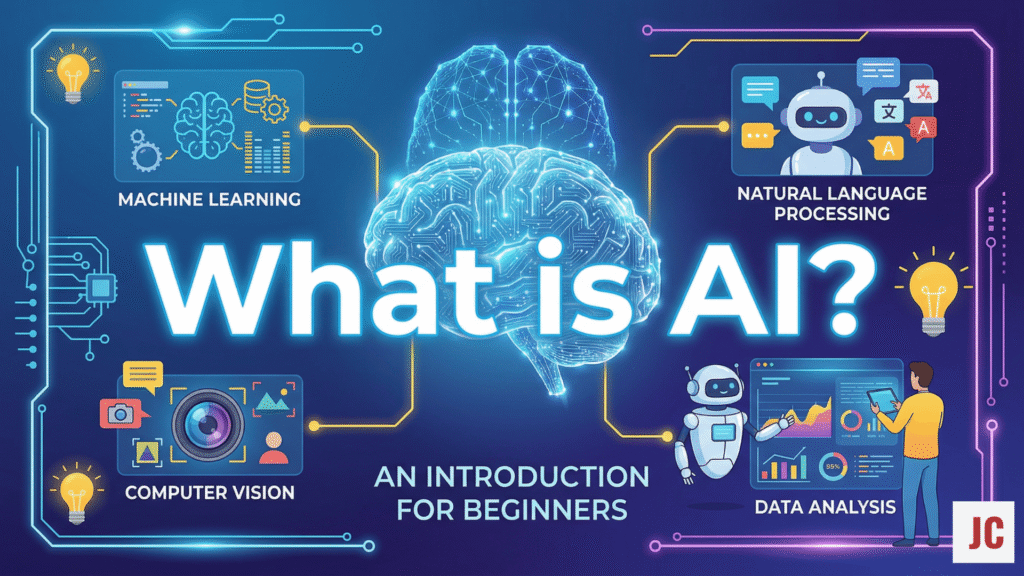
Artificial Intelligence (AI) is a technology that enables machines and computer systems to simulate human intelligence. This means AI can perform tasks that normally require human thinking, such as learning from experience, recognizing patterns, understanding language, solving problems, and making decisions.
Instead of being programmed step-by-step with fixed instructions, AI systems are designed to learn from data. The more data they receive, the better they become at making predictions and improving their performance over time.
For example, when you use streaming platforms like Netflix or YouTube, the system analyzes what you watch, how long you watch it, and what you interact with. Based on this information, AI recommends content that matches your preferences. This is a real-world example of AI learning from your behavior and continuously improving its suggestions.
AI is not limited to entertainment. It is used in many areas of everyday life, including:
- Voice assistants like Siri and Google Assistant
- Online shopping recommendations
- Fraud detection in banking
- Navigation apps like Google Maps
At its core, AI works by combining data, algorithms, and computing power to mimic human intelligence in a scalable and efficient way. Unlike humans, AI can process massive amounts of information in seconds, making it extremely powerful for solving complex problems.
In simple terms, AI is about teaching machines to learn, think, and act intelligently—just like humans, but faster and often more efficiently.
How AI Works (Simple Explanation)
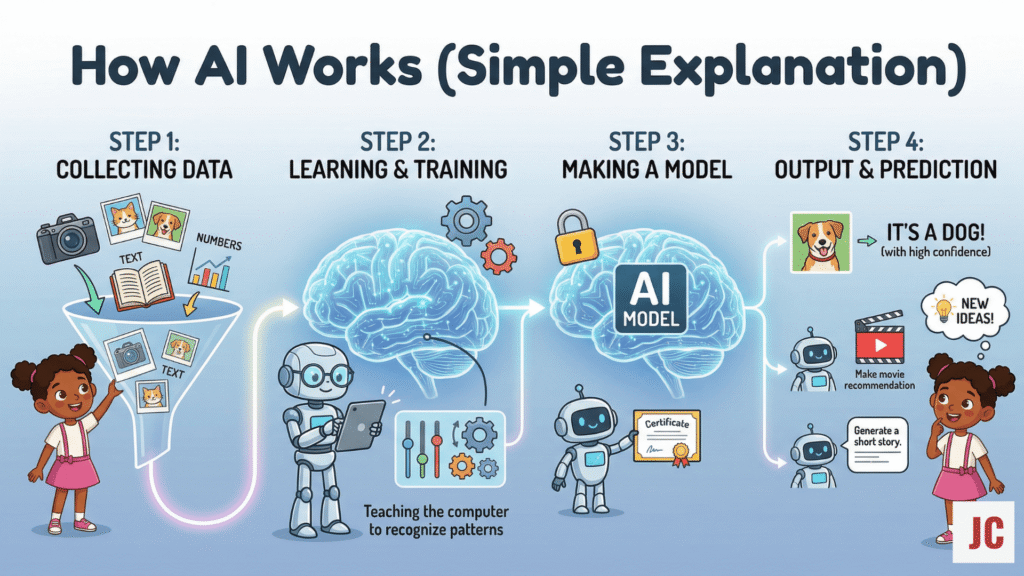
AI works using 3 main components:
1. Data
AI learns from data (images, text, videos, numbers)
2. Algorithms
These are rules or models that help AI understand patterns
3. Training
AI improves over time by learning from more data Think of AI like a student:
- Data = books
- Algorithm = brain
- Training = studying
Types of AI You Should Know
1. Narrow AI (Weak AI)
- Designed for specific tasks
- Example: Chatbots, Google Translate
2. General AI (Future AI)
- Can think like humans (still not fully developed)
3. Generative AI
- Creates content (text, images, videos)
- Example: ChatGPT, Midjourney
Real-Life Examples of AI
AI is already everywhere:
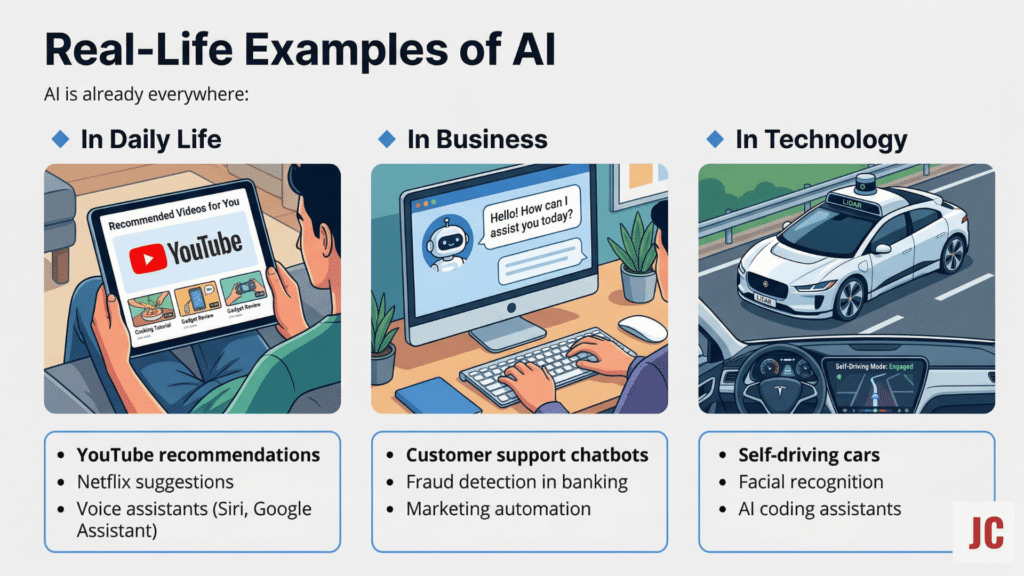
In Daily Life
- YouTube recommendations
- Netflix suggestions
- Voice assistants (Siri, Google Assistant)
In Business
- Customer support chatbots
- Fraud detection in banking
- Marketing automation
In Technology
- Self-driving cars
- Facial recognition
- AI coding assistants
Why AI is Important in 2026
AI is changing how the world works.
Key reasons
- Saves time and increases productivity
- Automates repetitive work
- Helps make better decisions
- Creates new job opportunities
People who understand AI will have a huge advantage.
How Beginners Can Start Using AI Today
You don’t need to be a programmer.
Here are simple ways to start:
1. Use AI Tools
- ChatGPT → writing & ideas
- Canva AI → design
- Notion AI → productivity
2. Learn Basic Concepts
- Machine Learning
- Data
- Automation
3. Practice Daily
Try using AI in:
- Writing emails
- Summarizing documents
- Generating ideas
Common Myths About AI
❌ “AI will replace all jobs”
👉 Truth: AI will change jobs, not replace everything
❌ “AI is too hard to learn”
👉 Truth: Beginners can start in 1 day
❌ “AI is only for developers”
👉 Truth: Anyone can use AI tools
Benefits of Learning AI
- Increase your income opportunities
- Work faster and smarter
- Stay competitive in the job market
- Build future-proof skills
Risks and Challenges of AI
Privacy concerns
- Bias in AI models
- Over-reliance on automation
👉 Important: Use AI wisely, not blindly
Future of AI (What to Expect)
In the next few years:
- AI will become more human-like
- More jobs will involve AI skills
- AI tools will become easier to use
- Every business will use AI
Final Thoughts
Artificial Intelligence is no longer just a concept of the future—it is already shaping the way we live, work, and interact with technology every single day. From simple tasks like searching for information online to more advanced applications such as automation, data analysis, and content creation, AI has become an essential part of modern life.
For beginners, the most important thing to understand is that AI is not as complicated as it may seem. You don’t need to be a programmer or a data scientist to start using AI tools. In fact, many AI-powered platforms today are designed to be user-friendly and accessible to everyone. Whether you are a student, a professional, or a business owner, learning how to use AI can significantly improve your productivity and open up new opportunities.
As AI continues to evolve, it will play an even bigger role in almost every industry—from healthcare and finance to education and entertainment. This means that having a basic understanding of AI is becoming a valuable skill, much like using the internet or basic software tools in the past. Those who adapt early will have a clear advantage in the digital world.
However, it is also important to use AI responsibly. While AI can make life easier and more efficient, it should not replace critical thinking or human judgment. Understanding both the benefits and the limitations of AI will help you use it more effectively and avoid common pitfalls.
In the end, AI is simply a tool—and like any tool, its value depends on how you use it. The best way to get started is to explore, experiment, and apply AI in your daily tasks. The more you use it, the more confident and skilled you will become.
The future belongs to those who are willing to learn and adapt. And with AI becoming one of the most important technologies of our time, there has never been a better moment to start your journey.
About The Author
