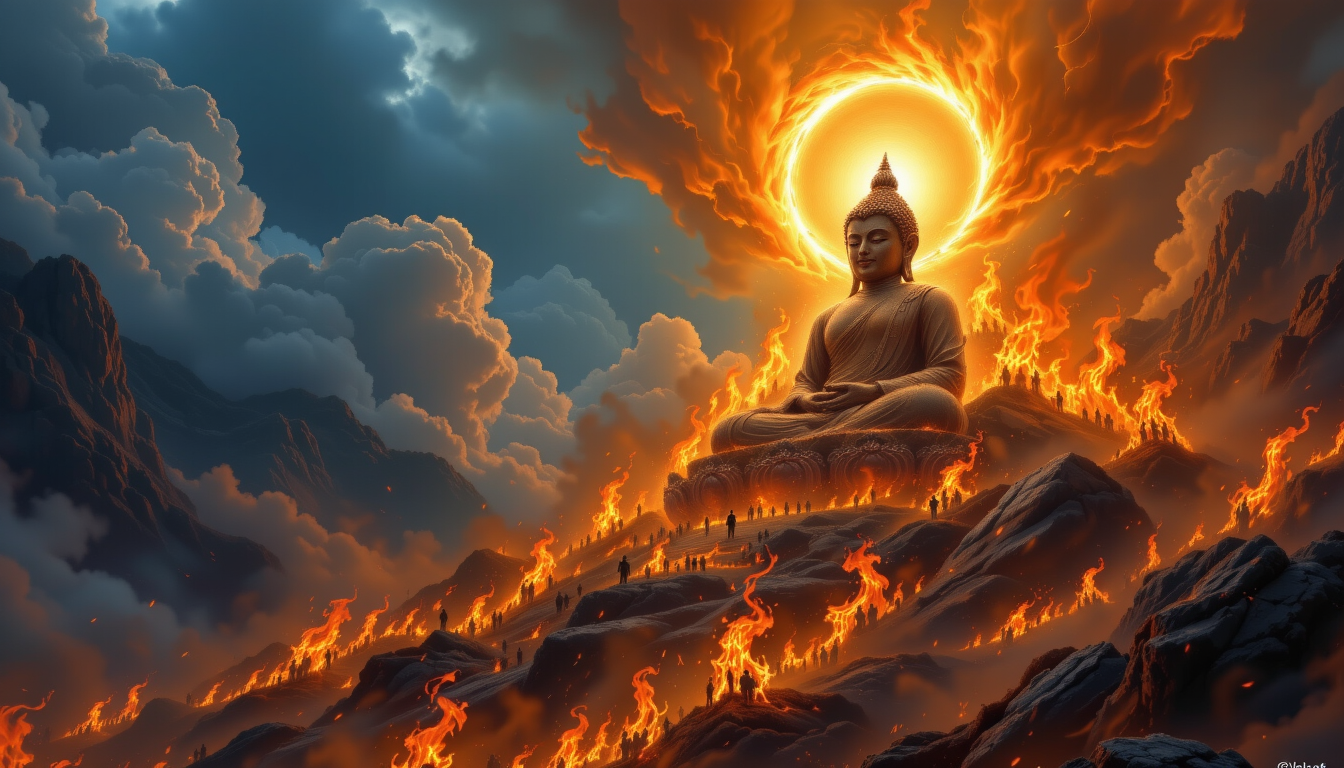
When people ask, “Does God really exist?”, they are often looking for certainty, comfort, and a foundation of faith. Different religions provide different answers: some affirm an all-powerful creator, others propose many deities, and some reject the idea altogether. From the Buddhist perspective, this question is approached in a unique way—through the lens of human experience, impermanence, and the path to liberation.
1. The Human Desire for a Higher Power
Since ancient times, humans have sought explanations for natural phenomena, suffering, and the mysteries of life and death. The concept of “God” often arises from this need. A divine being represents security, justice, and ultimate truth. Believing in a powerful protector can give people hope and moral direction.
But Buddhism asks: Do we need to rely on an external power to find peace? Or can truth be discovered within ourselves?
2. The Buddha’s Silence on the Creator Question
When the Buddha was asked about the existence of a creator God, he often remained silent. Why? Because such questions do not directly lead to the end of suffering. The Buddha’s focus was practical: he taught the Four Noble Truths and the Noble Eightfold Path as a way to free oneself from craving, ignorance, and suffering.
In other words, whether or not a creator exists, the essential problem remains: we suffer. And the solution lies in transforming our own mind, not in speculation.
3. Gods in Buddhism
Interestingly, Buddhism does not deny the existence of gods or heavenly beings (devas). The scriptures mention multiple realms of existence, including divine realms where beings live long and blissful lives. However, these gods are not eternal, all-powerful, or creators. They too are subject to impermanence (anicca), karma, and rebirth.
Thus, while gods may exist, they are not ultimate answers to human suffering. Even they must eventually face the law of karma.
4. Searching for God Within
For Buddhists, the most important “divine” discovery is not outside but inside. When we develop wisdom, compassion, and mindfulness, we touch the deepest reality. Some teachers say: “If you want to see God, look at the purity of your own heart.”
In this sense, the search for God is symbolic of the search for truth, for unconditional love, for the unshakable freedom that Buddhism calls Nirvana.
5. Respect for Different Beliefs
Buddhism encourages respect for people of all faiths. If belief in God inspires someone to live with kindness, honesty, and compassion, then that faith is beneficial. The Buddha did not reject others’ beliefs; instead, he guided people to practice wholesome actions, regardless of theology.
So the real question may not be “Is God real?” but “Does my belief—or non-belief—lead me closer to wisdom and compassion?”
6. Conclusion
From the Buddhist view, the question of God’s existence is less important than the question of how we live. God may or may not exist, but suffering definitely exists, and the path to end suffering is within reach. Instead of debating metaphysical questions, Buddhism invites us to practice mindfulness, cultivate compassion, and realize the truth of impermanence and non-self.
In the end, the essence of the Buddhist answer is this:
- Do not worry too much about whether God exists.
- Worry about whether you are walking the path that frees you from suffering.
And if we live with kindness, wisdom, and awareness, then—whether or not God exists—we will certainly live a meaningful life.