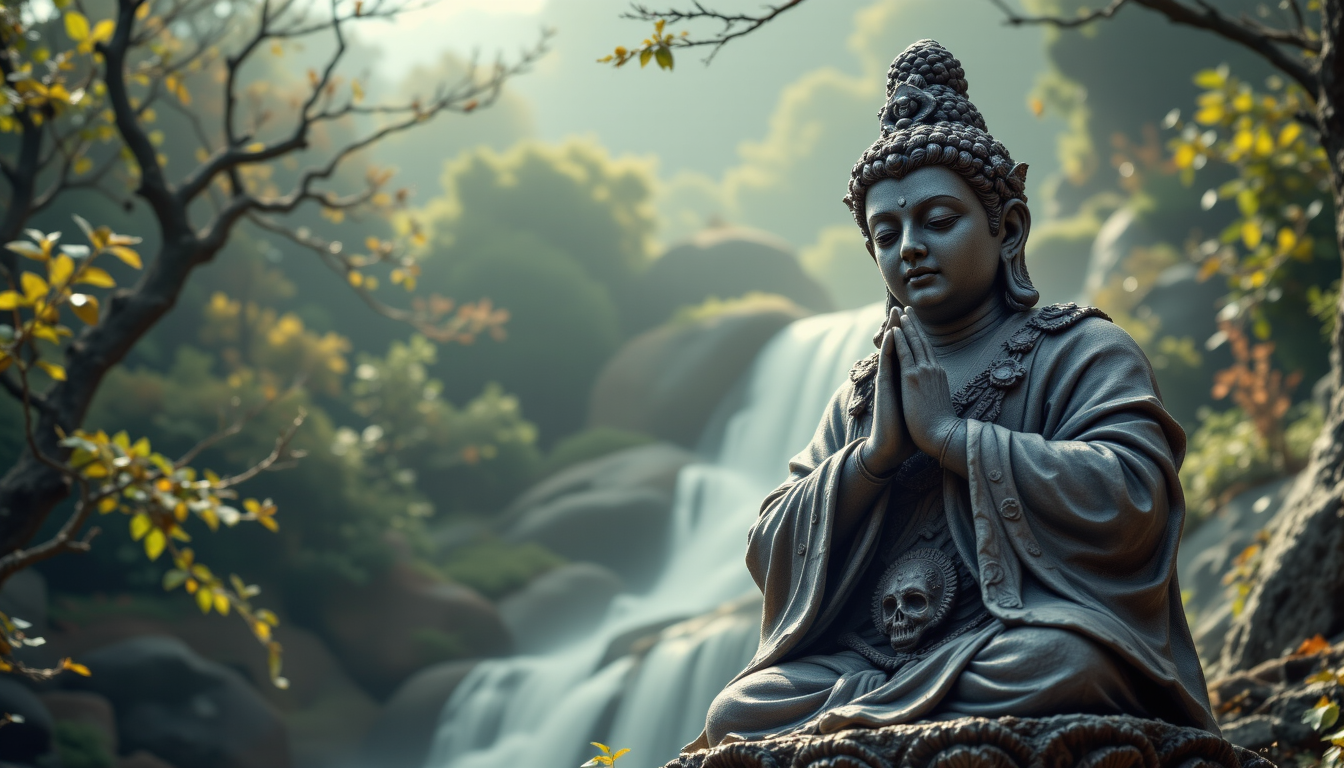
Meditation is one of the most important practices in Buddhism. It is a path that brings calmness, clarity, and wisdom into daily life. Many people who first encounter meditation feel that it is difficult or complicated, but in truth meditation is very natural. It is simply the art of training the mind to stay steady and peaceful. This article will provide a detailed guide on meditation training for beginners, explain the Buddhist foundations, give practical steps, and show how meditation can transform everyday living.
The Meaning of Meditation in Buddhism
In Buddhism, meditation is called Bhavana which means mental cultivation or development. It is not only about sitting still with closed eyes but about training the mind in mindfulness and concentration so that wisdom can arise. The Buddha taught that meditation is one of the central practices that lead to the end of suffering. Through meditation, a person learns to see reality clearly, free from distortion, desire, and aversion.
Meditation can be divided into two broad aspects. The first is Samatha or tranquility meditation which calms the mind and develops concentration. The second is Vipassana or insight meditation which helps us see the impermanent and selfless nature of all phenomena. Beginners usually start with simple methods of calm meditation such as breathing awareness before moving gradually toward insight.
Why Meditation Is Important for Beginners
For a person who has never practiced meditation before, the mind may feel restless and distracted. Everyday life brings countless pressures, worries, and responsibilities. The mind easily jumps from one thought to another. Meditation helps beginners to slow down and observe what is happening inside. It provides tools to handle stress, develop inner balance, and open the door to spiritual growth.
The benefits of meditation for beginners include
- Reduced stress and anxiety
- Better emotional control
- Improved concentration and memory
- Greater patience and tolerance
- Enhanced self awareness
- Deeper connection with peace and happiness within
Most importantly, meditation allows a person to experience freedom from constant craving and dissatisfaction. It is not an escape from life but a way to live life with more wisdom and compassion.
Common Misunderstandings About Meditation
Before discussing methods it is helpful to clear some misunderstandings that often discourage beginners.
- Meditation is not about stopping thoughts completely. It is about being aware of thoughts without being controlled by them.
- Meditation is not limited to sitting with crossed legs. It can be practiced in many postures such as walking, standing, or lying down.
- Meditation does not require belief in any particular religion. While deeply rooted in Buddhism, the practice of mindfulness is universal.
- Meditation does not mean forcing the mind into silence. It means observing naturally with patience.
- Progress in meditation is not measured by mystical experiences but by how daily life improves in clarity, kindness, and wisdom.
By removing these misunderstandings, beginners can approach meditation with an open and relaxed attitude.
Preparing for Meditation Practice
A beginner should create suitable conditions before starting meditation. These conditions help the mind to become calm and focused.
- Choose a quiet place with minimal distraction. It does not have to be a temple or monastery. A corner of the room can be enough.
- Select a time when the body and mind are not too tired such as morning or evening.
- Sit in a comfortable posture that keeps the back straight but not stiff. The posture should allow breathing to be natural.
- Wear simple clothing that does not restrict movement.
- Begin with a short session such as 10 to 15 minutes, then gradually extend to 30 minutes or more.
The most important preparation is intention. Approach meditation with sincerity and patience. Do not expect immediate results but trust in gradual development.
Basic Breathing Meditation
One of the simplest and most effective practices for beginners is breathing meditation. This method was taught by the Buddha and is known as Anapanasati which means mindfulness of breathing.
The steps are as follows
- Sit comfortably with the spine upright. Place the hands on the lap. Gently close the eyes.
- Bring attention to the natural breath. Notice the air entering and leaving through the nose.
- Do not try to control the breath. Simply observe its natural rhythm.
- If the mind wanders, gently bring it back to the breath without judgment.
- Use counting if needed. For example count one as the breath goes in and one as the breath goes out up to ten then start again.
- Continue for the set period. End the session by gently opening the eyes and resting for a moment.
Breathing meditation is simple yet powerful. It anchors the mind in the present and provides a stable foundation for further practice.
Walking Meditation
Besides sitting, walking meditation is very beneficial for beginners. It combines mindfulness with gentle physical movement.
To practice walking meditation
- Choose a quiet path about ten to twenty steps long.
- Stand still for a moment and bring awareness to the body.
- Begin walking slowly. Notice the lifting, moving, and placing of each foot.
- Keep the eyes softly open, focused on the ground ahead.
- When reaching the end of the path, pause, turn mindfully, and continue.
- If the mind wanders, gently return to the movement of the feet.
Walking meditation helps to integrate mindfulness into daily activity. It is especially useful for those who find sitting difficult.
Loving Kindness Meditation
Another helpful practice for beginners is loving kindness meditation known as Metta Bhavana. This meditation develops a heart of goodwill toward oneself and others.
Steps include
- Sit comfortably and bring awareness to the heart.
- Start by generating a feeling of kindness toward oneself. Repeat silently May I be happy May I be healthy May I be safe May I live with ease.
- Extend this feeling to a loved one with the same phrases.
- Gradually expand to neutral people, to difficult people, and finally to all beings everywhere.
Loving kindness meditation softens the mind, reduces anger, and creates a sense of connection. For beginners, it balances the practice of concentration with compassion.
Dealing with Common Difficulties
Beginners often face obstacles during meditation. Understanding them helps to overcome discouragement.
- Restlessness The mind jumps from thought to thought. Solution Return gently to the object of meditation without force.
- Sleepiness The body becomes heavy and the mind dull. Solution Open the eyes slightly or practice walking meditation.
- Doubt Thoughts arise questioning the value of practice. Solution Remember that persistence brings results even if they are gradual.
- Physical discomfort Pain or stiffness in the body. Solution Adjust posture mindfully without irritation.
- Expectations Desire for quick progress or special experiences. Solution Practice with patience and let go of attachment to results.
These difficulties are normal. By facing them with patience and mindfulness, beginners strengthen their meditation skills.
Bringing Meditation Into Daily Life
Meditation is not only for the cushion. The real value is how it transforms daily living. Beginners can apply meditation in simple ways
- Practice mindfulness while eating by paying attention to each bite.
- Be aware while walking, noticing the contact of the feet with the ground.
- Listen attentively in conversation without rushing to respond.
- Take a few mindful breaths before starting important tasks.
- Pause during stressful moments to reconnect with calmness.
Through these applications, meditation becomes part of everyday life. It is not separate from work, family, or social interaction.
The Role of Teachers and Community
While meditation can be learned alone, beginners often benefit from guidance. A teacher can give instructions, correct mistakes, and encourage perseverance. Joining a meditation group or community provides support and inspiration. Listening to Dhamma talks and reading Buddhist texts also strengthen understanding.
However, it is important to remember that the essence of meditation lies in personal experience. Teachers and communities are helpful but the real work is done by the practitioner.
Gradual Progress in Meditation
Beginners should understand that progress in meditation is gradual. At first the mind may be restless and distracted. With consistent practice, concentration grows stronger and mindfulness becomes continuous. Over time, deeper insights into impermanence and non self arise.
The Buddha compared meditation practice to training an animal. At first it resists control, but with patience it becomes tame. Likewise, the mind becomes more obedient and peaceful through steady practice.
Meditation and the Path to Liberation
For Buddhists, meditation is not only for relaxation. It is a path leading to liberation from suffering. The Noble Eightfold Path taught by the Buddha includes Right Mindfulness and Right Concentration as essential steps.
Through meditation, one develops direct knowledge of the true nature of reality. This knowledge leads to letting go of attachment, craving, and ignorance. The ultimate goal is Nirvana which is complete freedom of the mind.
Even if a beginner does not yet aim for liberation, every step in meditation brings more peace and wisdom into life.
Practical Tips for Beginners
To summarize, here are practical tips for starting meditation
- Begin with short daily sessions rather than long but irregular ones.
- Choose one method such as breathing and stay with it for a period.
- Do not judge the quality of meditation by how peaceful it feels.
- Keep a simple record of practice to encourage consistency.
- Remember that meditation is a lifelong journey.
With these tips, beginners can cultivate a stable foundation.
Conclusion
Meditation training for beginners is a journey of patience, mindfulness, and discovery. It does not require complicated rituals or extraordinary skills. By starting with simple practices such as breathing awareness, walking meditation, and loving kindness, anyone can begin to experience the peace that lies within.
Meditation is not about escaping from life but about living with clarity and compassion. For beginners, the most important thing is to keep practicing regularly with a gentle and open heart. Over time the benefits will appear not only during meditation but in every aspect of daily living.
When the mind becomes calm and aware, wisdom naturally arises. This wisdom shows the impermanence of all things and frees the heart from suffering. In this way meditation is both the beginning and the end of the Buddhist path.