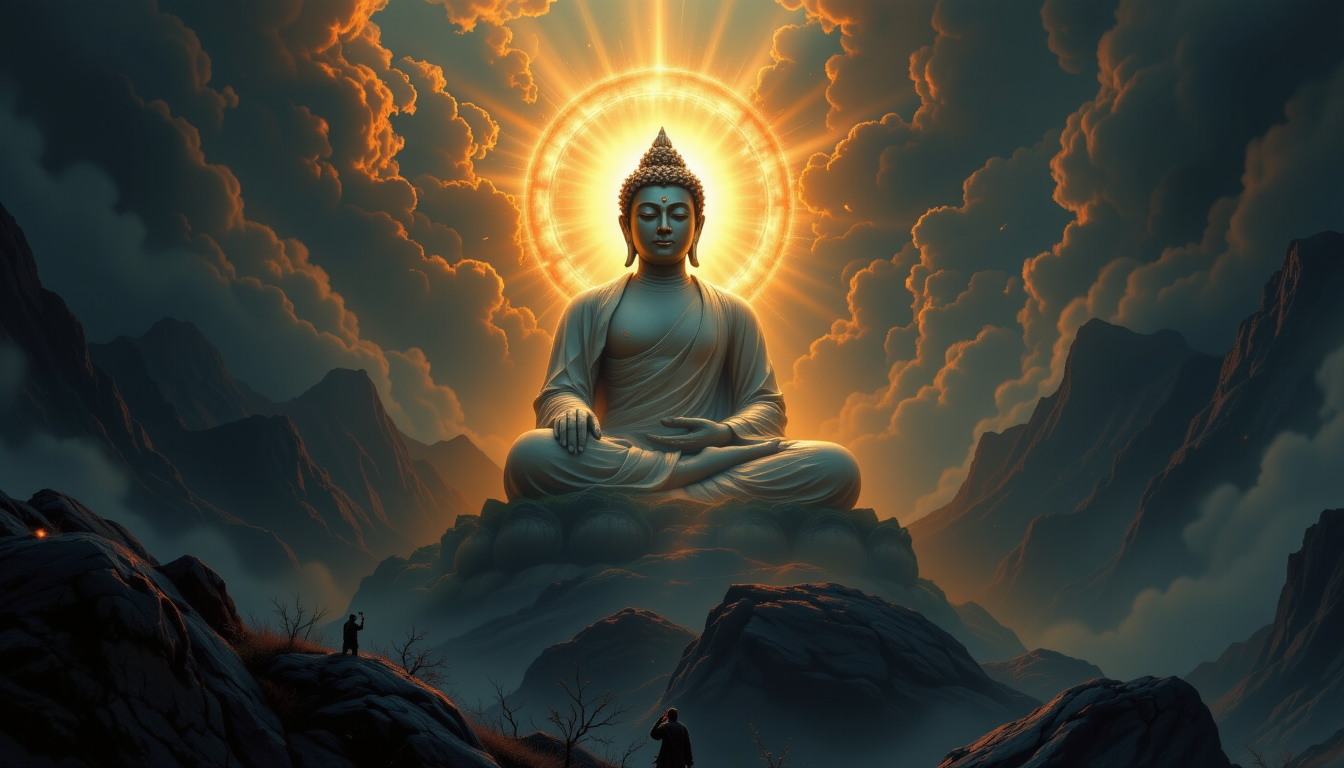
In the teachings of the Buddha, the universe is not limited to the human world. The Dhamma presents a vast cosmology that includes multiple realms of existence. Among them are the realms of the Devas—often translated as “celestial beings” or “heavenly beings.” These beings occupy higher planes of existence due to the power of their accumulated merit (puñña) in past lives. However, Buddhism emphasizes that even these radiant and blissful beings remain subject to the fundamental law of impermanence (anicca), suffering (dukkha), and non-self (anattā).
Unlike in many religious traditions where heaven is viewed as a permanent paradise or final goal, Buddhism teaches that heavenly existence is still part of saṃsāra, the endless cycle of birth, death, and rebirth. Thus, the Buddhist path encourages practitioners to go beyond even the heavenly realms and attain Nibbāna, the supreme liberation.
Who Are the Devas?
Devas are not “gods” in the sense of almighty creators. Instead, they are sentient beings with greater lifespans, refined happiness, and luminous bodies that arise from wholesome deeds in past existences. Their beauty, wisdom, and powers may surpass those of humans, but they are still impermanent, still bound to karma, and still subject to eventual decline and death.
The Buddha often reminded his disciples that the devas themselves respect the Dhamma. Many celestial beings appeared before the Buddha to express reverence or to ask for guidance, illustrating that even the most radiant beings look to the Dhamma as their refuge.
Realms of Devas in Buddhist Cosmology
1. The Sensual Heavens (Kāmadhātu)
The lowest of the heavenly realms still revolve around sensual pleasures, though they are far more refined than those found in the human world. The six sensual heavens include:
- The Heaven of the Four Great Kings (Cātummahārājika): Home to the guardians of the four directions, protectors of the human and celestial worlds.
- The Heaven of the Thirty-Three (Tāvatiṃsa): Ruled by Sakka (Indra), this heaven is often mentioned in Buddhist texts as a place where devas rejoice in good deeds and honor the Buddha.
- Higher sensual heavens: Such as Yāma Heaven, Tusita Heaven (where Bodhisattas reside before their final rebirth), Nimmānarati Heaven, and Paranimmita Vasavatti Heaven, where devas live in extreme bliss.
2. The Form Realms (Rūpadhātu)
These are realms of beings who have cultivated deep meditative concentration (jhāna). Inhabitants here no longer experience coarse sensual pleasures but dwell in sublime states of meditative absorption.
3. The Formless Realms (Arūpadhātu)
These are the highest heavenly planes, where beings exist without physical form, sustained by the subtle power of meditative absorption into infinite space, infinite consciousness, nothingness, and the sphere of neither perception nor non-perception.
Even these exalted beings, however, remain within saṃsāra.
Devas in Buddhist Scriptures
The Pali Canon records many encounters between devas and the Buddha. For example:
- At the time of enlightenment: It is said that countless devas across the universe celebrated the Buddha’s awakening, filling the skies with light and joy.
- Devas seeking the Dhamma: Stories recount devas descending to ask the Buddha questions about impermanence, karma, and liberation.
- Sakka’s devotion: Sakka, king of the Tāvatiṃsa Heaven, is often portrayed as a humble disciple of the Buddha who seeks guidance despite his celestial power.
These narratives illustrate that the Dhamma is universal—it applies equally to humans, devas, and all beings, no matter how high their status.
The Impermanence of Deva Realms
Although heavenly existence is long and blissful, it is not eternal. A deva may live for millions of human years, but when the karmic force that sustains their existence is exhausted, they will pass away and be reborn elsewhere—sometimes in lower realms of suffering.
The Buddha emphasized this truth to remind practitioners that the highest goal is not heavenly rebirth but liberation. In one discourse, he urged monks to reflect on the impermanence of even the greatest deva realms, so as not to be attached to the idea of heavenly reward.
Lessons for Human Practitioners
- The Power of Merit: Good deeds such as generosity, compassion, and moral discipline create wholesome karma that may lead to higher rebirths, including among the devas.
- The Danger of Attachment: Even the bliss of heaven can become a trap if one clings to it, forgetting that it is impermanent.
- The True Goal: While heavenly rebirth is a fortunate outcome, it is not the final liberation. The highest purpose of Buddhist practice is Nibbāna—freedom from all realms of rebirth.
- Respect Across Realms: The fact that devas pay homage to the Buddha and the Dhamma teaches us humility. If even celestial beings bow before the truth, humans too should cultivate respect and practice diligently.
Conclusion
The Buddhist teaching on devas serves as both an inspiration and a caution. On one hand, it shows the vastness of existence beyond the human realm and affirms that wholesome actions bear fruit far greater than we can imagine. On the other, it reminds us that no matter how glorious life may become, impermanence remains.
The path of the Buddha leads not to temporary bliss, but to the unshakable peace of Nibbāna. To practice generosity, morality, mindfulness, and wisdom is to walk on the path that transcends all realms, leading beyond heaven, beyond sorrow, to the end of suffering.