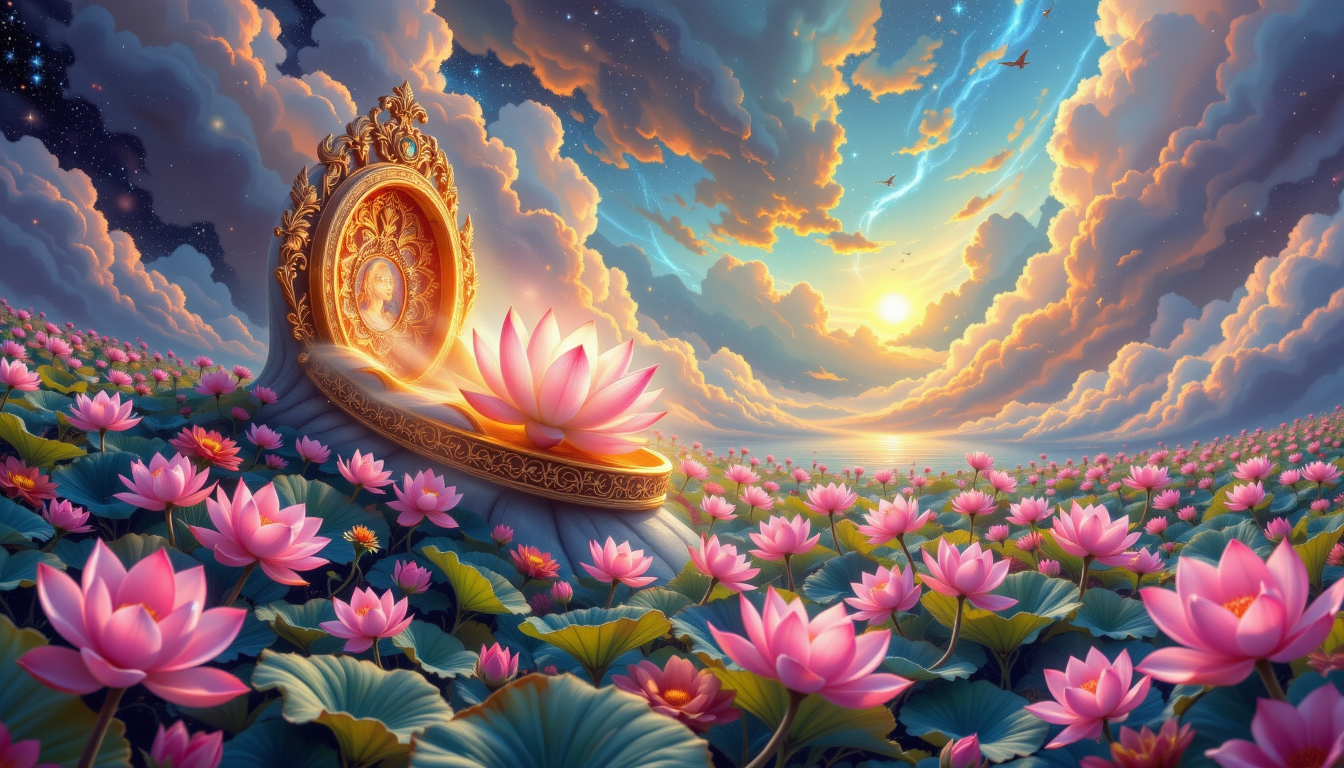
When people think of heaven, they usually imagine a place of eternal happiness, free from suffering, pain, and worries. In Buddhism, however, heaven (sagga in Pali, devaloka in Sanskrit) is understood in a more subtle and realistic way. Yes, there are heavenly realms of existence, but they are not eternal. They are beautiful, peaceful, and blissful, but they remain part of the cycle of samsara—the endless wheel of birth, death, and rebirth.
The Buddha’s teaching on heaven reminds us of two essential truths:
- Good actions bring happiness, often leading to heavenly rebirth.
- Even heaven is impermanent and cannot provide ultimate liberation.
The Structure of Heaven in Buddhist Cosmology
Buddhist texts describe 31 planes of existence, ranging from the lowest hells to the highest formless meditative states. Among these, there are several heavenly realms, divided into three broad categories:
- Sensual heavens (Kāmāvacara deva realms)
- These are heavens where beings enjoy refined pleasures of the senses. Examples include the heaven of the Four Great Kings (Cātummahārājika) and the Tāvatiṃsa heaven, where the deity Sakka (Indra) rules.
- Form heavens (Rūpāvacara Brahma realms)
- Higher than sensual heavens, these realms are attained by beings who developed deep meditation on form-based objects. Here, life is serene, without coarse desires.
- Formless heavens (Arūpāvacara Brahma realms)
- The highest heavens, attained through profound meditation on formless objects, such as infinite space or infinite consciousness.
Each of these heavens provides an extraordinarily long lifespan compared to humans—sometimes lasting millions of human years.
How Beings Are Reborn in Heaven
According to Buddhism, rebirth is governed by karma (intentional actions). When a person cultivates good deeds such as:
- Generosity (dāna): sharing wealth, time, or kindness with others.
- Morality (sīla): living a life of virtue and avoiding harm to others.
- Meditation (bhāvanā): training the mind to develop peace, concentration, and wisdom.
These wholesome actions plant seeds that can ripen as rebirth in a heavenly realm.
For example, the Dīgha Nikāya mentions that those who live a moral life and cultivate generosity may be reborn in the Tāvatiṃsa heaven, enjoying happiness among the gods.
The Joy and Beauty of Heaven
The descriptions of heaven in Buddhist texts are rich and inspiring:
- Beings there have radiant bodies, free from sickness and old age.
- Their environment is filled with gardens, palaces, and celestial music.
- They can fulfill their wishes effortlessly, living without struggle.
The heavenly realms symbolize the results of goodness. Just as bad deeds bring suffering, good deeds bring joy, sometimes as extraordinary as heaven itself.
The Impermanence of Heaven
Despite its beauty, the Buddha constantly reminded his disciples that heaven is not the ultimate refuge.
- Even heavenly beings are subject to impermanence (anicca).
- Their lives, though long, eventually come to an end.
- When their merit is exhausted, they fall from heaven, possibly into lower realms depending on their karma.
This teaching highlights the danger of attachment. If one clings to heavenly pleasures, one may become careless, forgetting the path to liberation.
Why the Human Realm Is Superior to Heaven
One of the most profound insights of the Buddha is that the human realm is more valuable than heaven. Why?
- In heaven, beings are often too intoxicated by pleasure to practice Dhamma deeply.
- In hell or animal realms, beings are overwhelmed by suffering and ignorance.
- Only in the human realm is there a balance—enough suffering to remind us of impermanence, but enough freedom to practice meditation and wisdom.
Thus, the Buddha praised human life as a rare and precious opportunity to walk the path to Nibbāna.
The True Goal Beyond Heaven
The ultimate goal in Buddhism is Nibbāna (Nirvana)—the unconditioned state beyond birth and death, beyond all realms, including heaven.
- Nibbāna is the highest peace (paramaṃ santi).
- It is not created, not impermanent, and not dependent on karma.
- Unlike heaven, Nibbāna is eternal freedom from suffering.
The Buddha encouraged his disciples not to be satisfied with heavenly pleasures, but to cultivate wisdom leading to liberation.
Practical Lessons for Us
What can we learn from the Buddhist teaching on heaven?
- Do good deeds: Practice generosity, morality, and compassion. These bring happiness now and in the future.
- Don’t cling to pleasure: Remember that even the highest joys are temporary.
- Use human life wisely: This is our chance to walk the Noble Eightfold Path and free ourselves from the cycle of rebirth.
Conclusion
Heaven in Buddhism is real, beautiful, and desirable, but it is also impermanent. It serves as both an encouragement to practice goodness and as a reminder not to be deceived by temporary happiness. The Buddha’s message is clear: aim not just for heaven, but for liberation beyond heaven—towards Nibbāna, the ultimate freedom.