Elon Musk is once again making bold moves this time targeting one of the most critical bottlenecks in the tech world chip production.
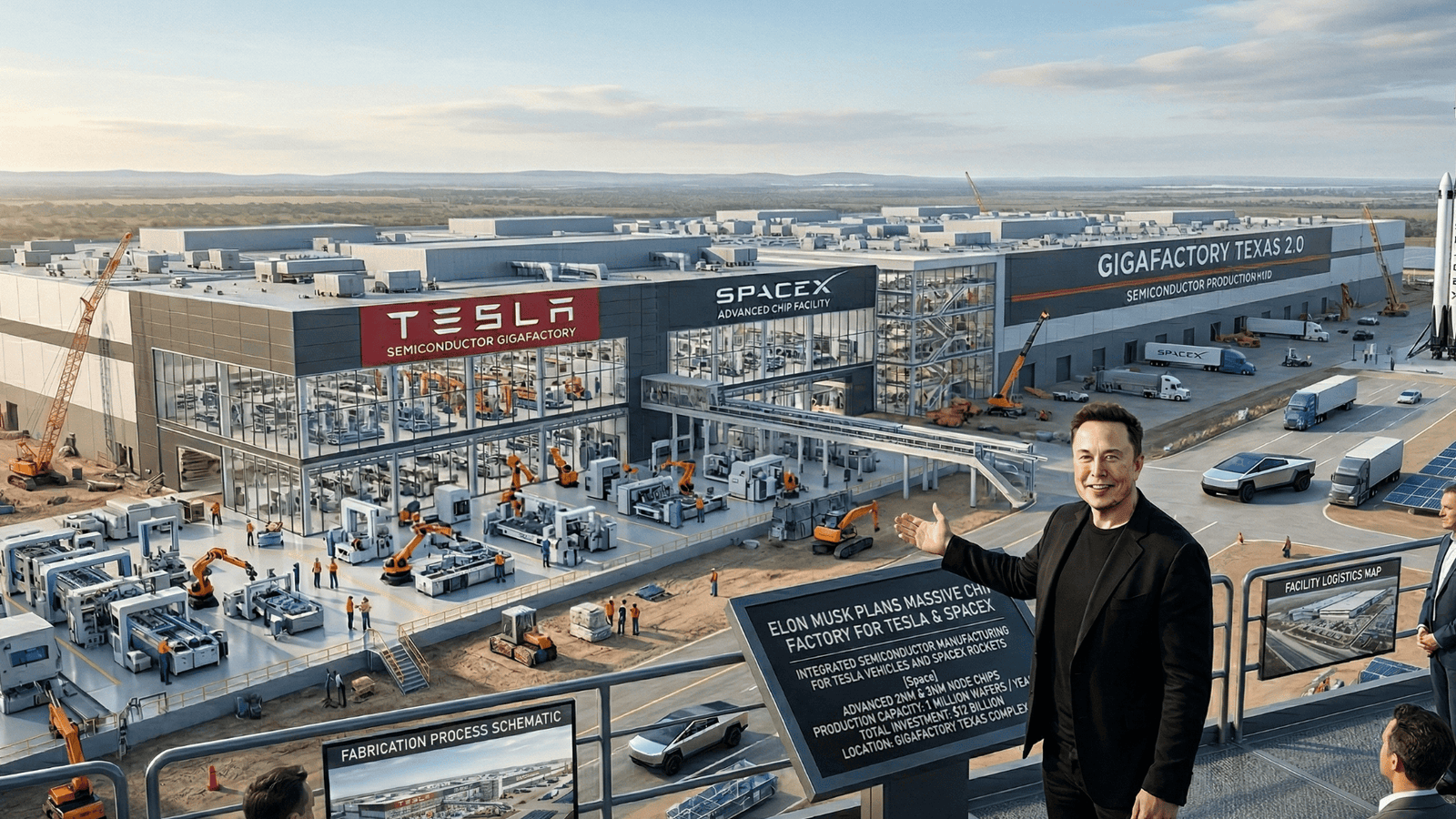
The billionaire entrepreneur recently revealed plans to build a large-scale semiconductor manufacturing operation that would serve both Tesla and SpaceX, aiming to secure the massive computing power needed for artificial intelligence and robotics.
Why Musk Wants to Build His Own Chips
According to reports, Musk introduced the idea during an event in Austin, Texas, where Tesla’s headquarters and Gigafactory are located. The proposed facility, which he reportedly calls “Terafab,” would be built nearby.
The reason behind this move is simple — and urgent.
Current semiconductor manufacturers are not producing chips fast enough to meet the growing demand from AI systems and robotics.
Musk made it clear that relying on third-party suppliers is no longer sustainable for his companies. Instead, he believes the only way forward is vertical integration — building everything in-house.
The Scale Is Huge (Even for Musk)
If the plan becomes reality, the Terafab facility would operate at an unprecedented scale.
- Target: 100–200 gigawatts of computing capacity per year on Earth
- Additional goal: Up to 1 terawatt of computing power in space
To put that into perspective
- This isn’t just about making chips for cars or rockets
- This is about powering next-generation AI systems at planetary scale
How This Impacts AI and Robotics
Tesla is already pushing forward with:
- Full Self-Driving (FSD)
- AI training clusters
- Humanoid robots (Optimus)
Meanwhile, SpaceX is building:
- Advanced satellite networks (Starlink)
- Future Mars missions requiring autonomous systems
All of these rely heavily on high-performance chips.
If Musk successfully builds Terafab, it could:
- Reduce dependency on companies like NVIDIA or TSMC
- Speed up AI development dramatically
- Give Tesla and SpaceX a massive competitive advantage
The Big Question: Can He Actually Do It?
While the vision is ambitious, there are real challenges.
Musk does not come from a semiconductor manufacturing background — an industry known for:
- High complexity
- Massive capital requirements
- Years of development time
He has also faced criticism in the past for setting aggressive timelines that are difficult to achieve.
And notably, no official timeline has been announced for this project.
What This Means for the Tech Industry
If Terafab becomes real, it could shift the balance of power in tech:
- AI companies may follow the same path (build their own chips)
- Chip shortages could become less of a bottleneck
- The race for AI dominance could accelerate even faster
But if it fails, it could also become one of the most expensive bets in tech history.
Final Thoughts
Elon Musk’s plan to build a chip manufacturing ecosystem is more than just another project — it’s a signal of where the industry is heading.
Control the chips = control the future of AI
Whether Terafab succeeds or not, one thing is clear:
The demand for computing power is exploding and the companies that secure it will lead the next era of technology.
Source techcrunch
About The Author